
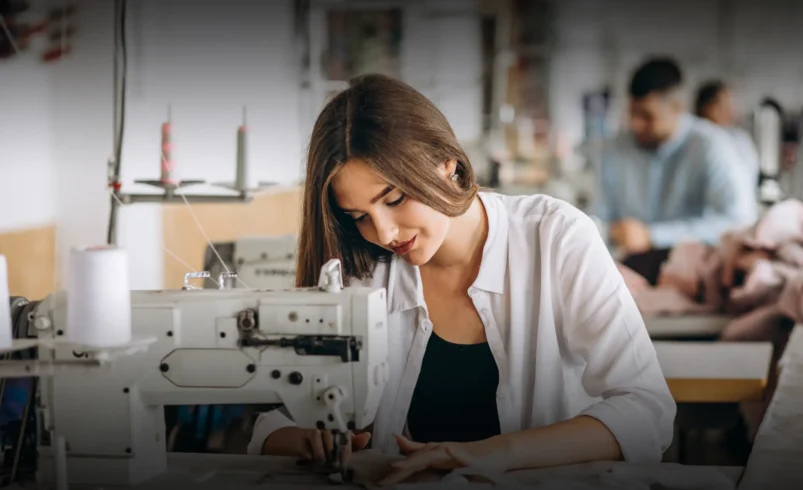

India’s apparel sector is entering a renewed growth phase as repeat orders from the United States continue to accelerate. After a period of demand volatility, consistent reordering by American buyers is stabilizing export pipelines and providing much-needed visibility to small and medium enterprises (SMEs). The surge in India apparel exports to the US is not only improving volumes but also strengthening long-term trade relationships.
For thousands of manufacturers across key clusters such as Tiruppur, Surat, Ludhiana, and Noida, this wave of repeat business is translating into improved capacity utilization, steady cash flows, and expansion opportunities in global markets.
Businesses aiming to connect with global buyers are increasingly leveraging Global B2B platforms to boost visibility and streamline sourcing processes.
What’s Driving Repeat Orders from the US
The increase in repeat orders is driven by structural shifts in global sourcing strategies. US buyers are actively diversifying away from single-country dependence and building multi-country sourcing networks.
Key Drivers
Supply chain diversification beyond China
Improved reliability and compliance from Indian manufacturers
Competitive pricing combined with consistent quality
Faster turnaround times from Indian exporters
Buyers who previously tested Indian suppliers with smaller orders are now scaling up, resulting in higher volumes and repeat contracts. This shift is significantly boosting US buyers’ confidence in Indian apparel sourcing.
Industry Data Reflecting the Trend
Recent data highlights the strength of this shift:
India’s apparel exports stand at approximately USD 15–17 billion annually
The US accounts for nearly 30–35% of India’s apparel exports
Apparel exports to the US have shown recovery with double-digit growth in select categories
Over 60% of SME exporters report repeat orders as their primary growth driver
The global apparel market is valued at over USD 1.7 trillion, with the US as the largest importer
This steady rise in garment exports among Indian SMEs is helping smaller businesses transition from transactional exports to long-term partnerships.
SME Clusters Benefiting the Most
The impact of repeat US orders is clearly visible across India’s key textile and apparel hubs.
Tiruppur (Knitwear Hub)
Known for cotton knitwear exports, Tiruppur SMEs are seeing increased repeat demand for:
T-shirts
Activewear
Casualwear
Surat (Synthetic and Fashion Wear)
Surat-based units are gaining traction in:
Women’s fashion wear
Synthetic garments
Fast-fashion categories
Ludhiana (Winter Wear)
Exporters here are benefiting from repeat orders in:
Sweaters
Woolen garments
Thermal wear
Noida and NCR (Export-Oriented Units)
These clusters are focusing on:
High-value garments
Branded apparel manufacturing
Compliance-driven production
Why Repeat Orders Matter More Than New Orders
Repeat orders provide a higher level of stability and long-term value for SMEs.
Key Benefits
Predictable revenue streams: Enables efficient production and inventory planning
Lower customer acquisition costs: Reduces the need for continuous marketing and onboarding
Stronger buyer relationships: Builds trust and leads to larger, more frequent orders
Scope for product expansion: Allows suppliers to introduce new designs and categories
This cycle continues to strengthen the ecosystem of India apparel exports to the US.
Changing Expectations from US Buyers
With repeat orders comes increased expectations. US buyers are now placing greater emphasis on:
Strict quality standards
Compliance with labor and environmental regulations
Transparency in supply chains
Timely delivery and consistency
Indian SMEs are adapting quickly by investing in improved processes and certifications to retain and expand buyer relationships.
Role of Fast Fashion and Seasonal Demand
The rise of fast fashion is contributing significantly to repeat ordering patterns.
US brands are now:
Placing smaller but more frequent orders
Rapidly changing designs
Relying on flexible and responsive suppliers
Indian SMEs that can respond quickly are benefiting the most from this trend.
Challenges Facing Apparel SMEs
Despite strong momentum, several challenges remain.
Key Challenges
Cost pressures: Rising raw material and labor costs impacting margins
Compliance costs: Continuous investment required to meet international standards
Global competition: Strong competition from Bangladesh, Vietnam, and emerging markets
Logistics constraints: Shipping disruptions affecting delivery timelines
Strategic Moves by Indian SMEs
To sustain growth in garment exports, Indian SMEs are adopting forward-looking strategies.
Key Strategies
Moving up the value chain: Focusing on premium and specialized garments
Investing in technology: Leveraging automation and digital tools for efficiency
Strengthening buyer communication: Ensuring transparency and regular updates
Diversifying product lines: Expanding offerings for existing buyers
Building direct relationships: Reducing dependency on intermediaries
This shift is also making it easier for global buyers to identify reliable Apparel and Fashion suppliers that align with their sourcing requirements.
Government Support and Policy Push
The Indian government is supporting the sector through several initiatives, including:
Production Linked Incentive (PLI) schemes for textiles
Export promotion policies
Infrastructure development in textile parks
These initiatives are helping SMEs enhance global competitiveness.
Global Supply Chain Shift Benefits India
The broader shift in global sourcing is working in India’s favor.
Key Trends
Brands are reducing dependency on single sourcing destinations
India is emerging as a reliable alternative manufacturing base
Buyers are prioritizing compliance and sustainability
This is strengthening the role of India within global apparel sourcing networks.
Future Outlook
The outlook for India apparel exports to the US remains strong.
Key Expectations
Continued growth in repeat orders
Expansion into new apparel categories
Increased SME participation in exports
Stronger integration into global supply chains
Industry experts believe India can significantly increase its share in the US apparel import market over the next decade.
Repeat orders from the US are acting as a major growth engine for India’s apparel SMEs. This shift is not just about higher volumes it reflects growing trust, improved capabilities, and stronger global positioning.
For SMEs, the opportunity is clear. Businesses that maintain quality, adapt to evolving buyer expectations, and invest in long-term relationships will be best positioned to benefit from sustained growth in garment exports and rising US demand.
