
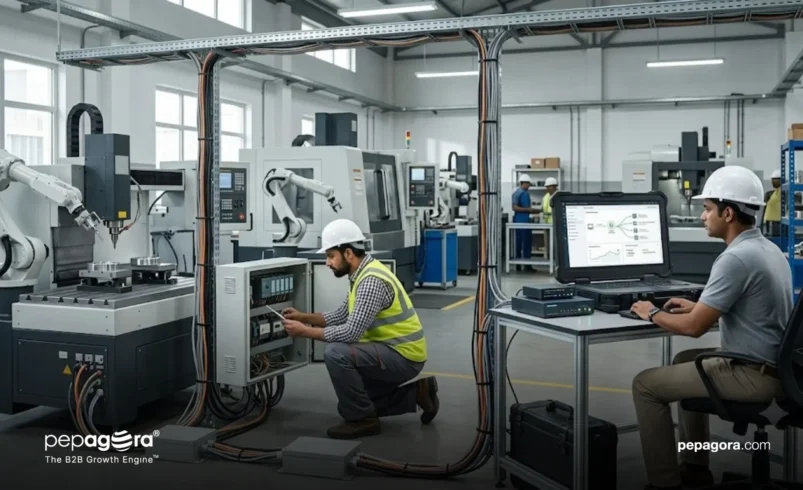

For many small manufacturers, cybersecurity is still associated mainly with computers, emails, websites and business software. But as factories adopt smart manufacturing, another layer deserves equal attention: Operational Technology (OT).
OT includes the systems and devices that monitor or control physical processes, such as industrial control systems, programmable logic controllers (PLCs), connected machinery and industrial IoT equipment. Unlike traditional IT, these systems directly interact with factory operations.
This means a cyber incident involving OT can affect more than data. It can potentially disrupt production, equipment availability, product quality and operational continuity.
As manufacturers connect more machines, sensors and software, cybersecurity needs to be considered alongside the wider shift toward AI adoption in manufacturing.
What Makes OT Different From IT?
IT systems primarily manage information, communication and business processes. OT systems control or monitor physical processes.
A manufacturing facility may have email and accounting software on one side, while production machines, PLCs, sensors and control systems operate on the factory floor. The two environments are increasingly connected.
This connection can improve visibility, remote monitoring and operational efficiency, but it can also create additional cybersecurity considerations.
As manufacturers adopt connected systems, understanding how production equipment communicates with business systems becomes increasingly important.
Why Small Manufacturers Should Pay Attention
Small and medium sized manufacturers often have limited cybersecurity resources. At the same time, many rely on older industrial equipment, remote maintenance connections, shared networks and systems that were not originally designed with modern cybersecurity in mind.
NIST specifically identifies small manufacturers as facing cybersecurity challenges because they may have limited resources while needing to protect both IT and OT environments.
As factories adopt connected machines, cloud platforms and remote monitoring, the number of potential entry points can increase.
This makes cybersecurity part of the wider digital transformation of manufacturing rather than only an IT responsibility.
What Can Go Wrong?
A cyberattack affecting factory systems can have operational consequences.
Potential impacts include:
- Production interruptions
- Unauthorised changes to machine settings
- Loss of production or operational data
- Equipment downtime
- Quality problems
- Disruption to supply commitments
- Increased recovery costs
For example, if an attacker gains unauthorised access to a connected production system, the resulting problem may not simply involve stolen information. Changes to configurations, system availability or communication between industrial devices could also affect production.
As businesses digitize operations, cybersecurity and data risks also become part of the wider technology planning process.
CERT In’s guidance for MSMEs identifies threats including ransomware, DDoS attacks, data breaches and malware, while recommending measures such as stronger authentication, access controls, patching, backups and incident response.
For businesses using industrial automation and connected equipment, these measures can form an important starting point.
How Small Manufacturers Can Protect OT
1. Know What Is Connected
The first step is understanding what systems and devices exist in the factory.
Manufacturers should maintain an inventory of machines, PLCs, sensors, industrial computers, network devices and remote access connections.
It is also useful to understand which systems communicate with one another and which devices are essential to production.
NIST’s OT guidance emphasises asset management and network visibility as important elements of OT security.
Without knowing what is connected, it becomes difficult to identify which systems need protection.
This becomes especially important as manufacturers add automation and connected industrial technologies to existing production environments.
2. Separate Critical Factory Networks
Not every device needs to communicate with every other system.
Network segmentation can separate critical production equipment from office computers and other less sensitive systems.
NIST recommends security zones and controlled communication between IT and OT assets as a practical approach for small manufacturers.
For example, production equipment may require communication with specific industrial systems but may not need unrestricted access to office devices or external networks.
Creating appropriate boundaries can help reduce the potential impact of a compromised device.
3. Control Remote Access
Remote access can be useful for maintenance, troubleshooting and equipment support, but it should not remain open without appropriate controls.
Businesses should review who has remote access, why access is required, when access is available and which systems can be reached.
Strong authentication and appropriate access permissions can reduce unnecessary exposure.
Manufacturers should also coordinate with machine suppliers and maintenance providers when remote connections are required for servicing industrial equipment.
4. Keep Systems Updated Where Feasible
Industrial equipment can sometimes be difficult to patch because updates may affect production, system compatibility or equipment availability.
Manufacturers should therefore work with equipment vendors and security teams to understand patching requirements and apply appropriate updates without compromising operational safety.
Where immediate patching is not practical, businesses can consider other protective measures such as network segmentation, access restrictions and increased monitoring.
The objective is to understand the security risk while considering the operational requirements of the factory.
5. Prepare for Recovery
Prevention is important, but manufacturers should also plan for what happens if an incident succeeds.
Critical configurations, production information and business data should be backed up appropriately.
Employees should know whom to contact and what actions to take if machines behave unexpectedly or systems become unavailable.
Businesses should also understand how important production systems can be restored after an incident.
This is particularly important as manufacturers connect production systems with wider digital business tools and ERP systems and other digital business platforms.
Cybersecurity Is Now Part of Factory Management
As manufacturing becomes more digital, cybersecurity can no longer sit entirely within the IT department.
Production managers, maintenance teams, machine operators, IT staff and business leaders all have a role to play.
Employees need to understand basic security practices, while management needs visibility into which factory systems are most critical.
This becomes particularly important as businesses connect machinery, sensors, industrial computers, cloud services and remote monitoring platforms.
The more interconnected the production environment becomes, the more important it is to understand how these systems depend on one another.
For small manufacturers, this does not mean building an expensive cybersecurity operation overnight. It means starting with the most important assets, understanding how they connect and gradually strengthening controls.
A Practical Starting Point for Small Manufacturers
A manufacturer beginning its OT cybersecurity journey can start with a simple review.
Identify: What machines, PLCs, sensors and industrial systems are connected?
Map: How do production systems communicate with IT networks, vendors and external services?
Control: Who can access critical systems, both locally and remotely?
Protect: Which systems require segmentation, authentication, monitoring or updates?
Recover: Can critical configurations and operational information be restored after an incident?
This approach can help smaller businesses build cybersecurity around actual factory requirements rather than treating it as a separate technical exercise.
Final Takeaway
Modern factories are increasingly dependent on connected technology, making cybersecurity a business continuity issue as well as an IT concern.
For MSMEs, protecting operational technology means knowing what is connected, controlling access, separating critical systems, monitoring networks, maintaining appropriate updates and preparing for recovery.
As manufacturing becomes smarter and more connected, securing the factory floor will be just as important as securing the office network.
FAQs
Operational Technology includes systems such as PLCs, industrial control systems, sensors and connected machinery that monitor or control physical processes.
An OT security incident can affect production, equipment availability, product quality and operational continuity, not just business data.
Start by identifying connected assets, controlling remote access, separating critical networks, applying appropriate updates and preparing reliable backups and recovery procedures.
