

A Policy Reset Focused on Liquidity Reform
In a decisive policy shift, the ₹10,000 crore SME Growth Fund announced under the Union Budget 2026 marks a structural intervention in one of the most persistent challenges faced by India’s MSME sector: working capital stress. For office supplies and equipment manufacturers, this is not a routine allocation. It represents a recalibration of the financial architecture that has long constrained expansion.
Manufacturers of printers, copiers, ergonomic furniture, IT hardware, storage systems, and consumables have consistently faced liquidity compression despite steady demand. Orders were available. Cash flow was not.
The Structural Working Capital Imbalance
For years, the operating cycle of MSMEs followed a predictable yet damaging pattern. Raw materials were purchased upfront. GST liabilities were triggered immediately. Salaries and utilities required timely payment. However, receivables from corporates and public sector buyers often stretched far beyond 60 to 120 days.
This mismatch created sustained financial strain. Bank loans risked classification as NPAs within 90 to 120 days, while payments remained pending for longer durations. Although the MSMED Act mandates settlement within 45 days, enforcement gaps diluted its effectiveness. The result was not lack of business opportunity, but restricted liquidity.
Many office equipment MSMEs declined large contracts or export commitments because financing the production cycle became riskier than the opportunity itself.
Growth Capital Over Relief Funding
Budget 2026 distinguishes itself by positioning the SME Growth Fund as expansion capital rather than temporary relief. The objective is clear: enable MSMEs to invest in automation, technology upgrades, quality certifications, and export readiness.
The emphasis on strengthening MSMEs as export drivers reflects a long-term industrial strategy. Capital access is being treated as a growth multiplier rather than a subsidy mechanism.
Credit Guarantee Expansion and Banking Confidence
An equally important reform is the strengthening of credit guarantee frameworks. By reducing lender exposure, banks are expected to extend higher working capital limits with reduced collateral pressure.
This measure can rebalance the financing equation. For office equipment manufacturers, greater banking confidence translates into operational breathing space and improved production planning.
Institutionalising Faster Payments Through TReDS
A major structural intervention is the mandatory adoption of the Trade Receivables Discounting System by Central Public Sector Enterprises. The reform seeks to formalize invoice discounting and compress payment timelines.
Integration of the Government e-Marketplace with TReDS is designed to streamline liquidity for MSMEs supplying government buyers. If implemented efficiently, this could significantly reduce historical delays in public procurement payments.
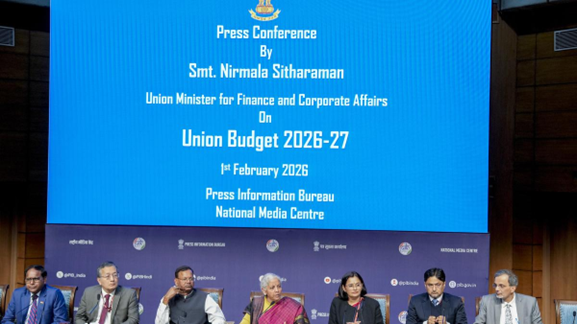
According to the Press Information Bureau, the ₹10,000 crore allocation underscores the government’s intent to position MSMEs as the backbone of India’s export growth strategy.
Unlocking Export Scalability
Improved liquidity directly enhances operational capacity. Bulk raw material procurement becomes feasible. Production scheduling stabilizes. Delivery timelines improve. Competitive pricing strengthens.
For office supplies and equipment manufacturers, export commitments that once strained cash reserves may now become commercially viable. The reform narrows the structural gap between MSMEs and larger corporations that traditionally enjoyed stronger balance sheets.
Execution Will Define the Impact
Policy direction is aligned. The financial pipeline is being reinforced. However, measurable impact will depend on implementation discipline.
MSMEs must actively adopt TReDS, optimize their presence on GeM, reassess internal working capital practices, and proactively engage with banks under enhanced guarantee structures. Digital readiness and compliance rigor will be decisive.
A Defining Year for Office Equipment Manufacturers
Budget 2026 sends a clear signal: liquidity constraints should no longer define growth ceilings. For office equipment manufacturers, this represents a potential inflection point.
If execution aligns with policy ambition, the sector can transition from survival-driven operations to scalable, export-oriented expansion. The ₹10,000 crore SME Growth Fund is therefore more than a fiscal announcement. It is a structural shift aimed at unlocking competitiveness in one of India’s most dynamic industrial segments.
Tags:
Budget 2026
About Author
Harsha Varthan
Harsha is a highly respected B2B marketing expert who passionately helps sellers and buyers connect, grow their businesses online, and build strong global visibility. His expertise spans SEO, content marketing, lead generation, marketplace strategy, public relations, and result-driven digital growth planning, making him a trusted voice in the industry.