
India just made its biggest industrial bet in decades.
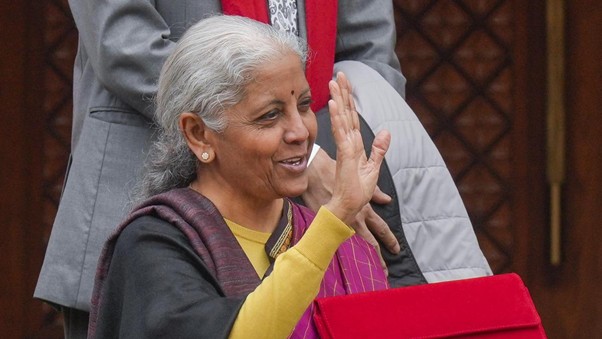
On February 1, 2026, Finance Minister Nirmala Sitharaman presented her ninth consecutive Union Budget in Parliament, placing manufacturing squarely at the centre of India’s economic future.
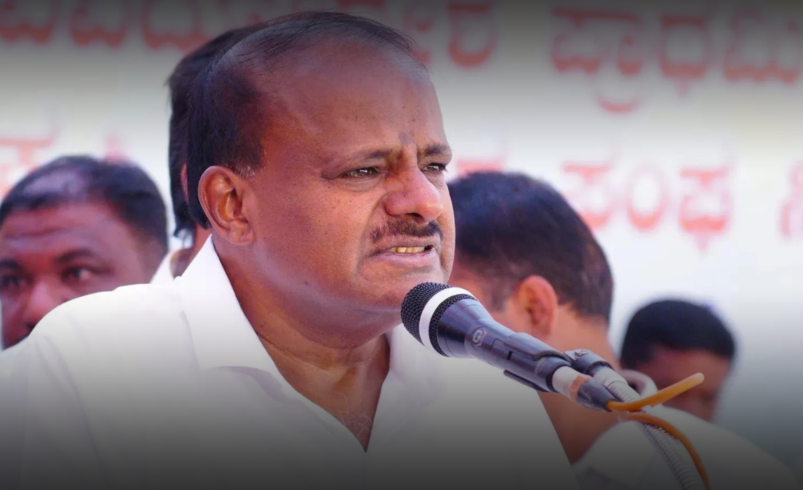
The Ministry of Heavy Industries, currently headed by H. D. Kumaraswamy, will play a key role in steering capital goods and industrial equipment initiatives linked to the budget announcements.
For India’s Industrial Equipment & Machinery Manufacturers, including including procurement managers, equipment buyers, suppliers, and business owners this is more than just another policy announcement.
This is a fundamental shift in how India plans to build, source, and grow.
Here is a breakdown of what was announced, what it means in real terms, and why now is the right time to pay close attention.
India Semiconductor Mission 2.0: The ₹40,000 Crore significant change
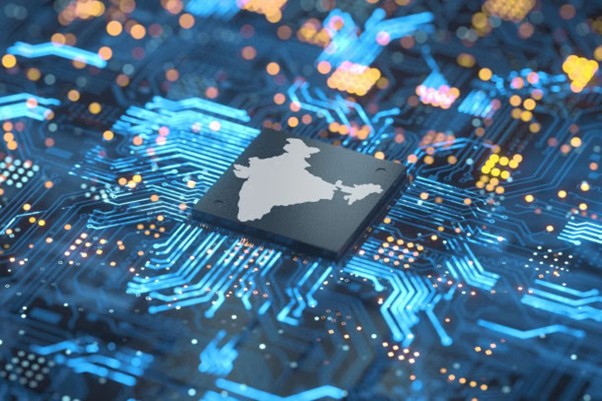
The biggest headline out of Budget 2026 for the industrial sector is the launch of India Semiconductor Mission 2.0 (ISM 2.0), alongside a major boost to the Electronics Components Manufacturing Scheme (ECMS), whose outlay has been raised from ₹22,919 crore to ₹40,000 crore, as confirmed by PIB India in the official Budget announcement.
The scale of ambition behind this push becomes clear when you look at the numbers. As reported by Entrepreneur India, India currently consumes close to $50 billion worth of semiconductors annually, yet domestic production accounts for less than $2–3 billion of that. With demand projected to cross $100 billion by 2030, India’s dependence on imported chips has long been a vulnerability for its industrial and manufacturing sectors.
Speaking in Parliament, FM Sitharaman put it plainly: “Building on ISM 1.0, we will launch ISM 2.0 to produce semiconductor equipment and materials, design full-stack Indian IP, and fortify supply chains.”
According to the official ISM 2.0 document published by PIB India, a ₹1,000 crore provision has been made for FY 2026–27 to kick off the mission, with strong emphasis on industry-led research and training centres. ISM 1.0 already has 10 approved projects representing ₹1.60 lakh crore in total investment across six states, and ISM 2.0 builds directly on this foundation. By 2029, India aims to manufacture chips covering 70–75% of its domestic requirements, and by 2035 aims to rank among the world’s top semiconductor nations.
Sujay Shetty, Managing Director (ESDM & Semiconductor) at PwC India, summed up the industry sentiment: “The focus on domestic production of equipment and materials, full-stack design capabilities, Indian IP development, and resilient supply chains could significantly elevate India’s position in the global semiconductor value chain.”
For industrial equipment buyers, this matters directly. Semiconductors power the intelligence in virtually every modern machine, including CNC systems, PLCs, industrial robots, smart sensors, and IoT-enabled factory equipment. As India builds this capacity domestically, equipment costs are expected to fall, lead times will shorten, and supply chains will become far less vulnerable to global disruptions.
₹12.2 Lakh Crore in Capex: A Historic Demand Engine for Industrial Equipment
If semiconductors are the headline, capital expenditure is the engine, and this year’s engine is the biggest India has ever built.
As confirmed by IBEF’s official Budget analysis and reported by Business Standard, FM Sitharaman announced that public capital expenditure will be raised to ₹12.2 lakh crore for FY 2026–27, up from ₹11.2 lakh crore in the previous year, marking a 9% increase that builds on a decade-long push from just ₹2 lakh crore in 2014–15.
The infrastructure projects receiving this capital make the demand picture crystal clear. According to DD News and The Print, the key announcements include:
- Seven new high-speed rail corridors developed as “growth connectors”: Mumbai–Pune, Pune–Hyderabad, Hyderabad–Bengaluru, Hyderabad–Chennai, Chennai–Bengaluru, Delhi–Varanasi, and Varanasi–Siliguri. Railway Minister Ashwini Vaishnaw noted these seven corridors span nearly 4,000 kilometres and are expected to attract investments of approximately ₹16 lakh crore, as reported by the Free Press Journal.
- A new Dankuni–Surat Dedicated Freight Corridor spanning 2,052 km across six states, strengthening multimodal logistics and freight efficiency across the country.
- Twenty new National Waterways will be operational over the next five years, starting with National Waterway-5 in Odisha.
- A Coastal Cargo Promotion Scheme to raise the share of inland waterways and coastal shipping in freight from 6% to 12% by 2047.
Each of these projects creates sustained, multi-year demand for heavy machinery, earth-moving equipment, cranes, conveyor systems, compressors, and dozens of related industrial categories. Infrastructure at this scale simply does not get built without industrial equipment.

Hi-Tech Tool Rooms: India’s Precision Manufacturing Gets an Upgrade
One of the less-reported but highly significant announcements in Budget 2026 is the setting up of CPSE-led Hi-Tech Tool Rooms, two automated service bureaus designed to locally design, test, and manufacture precision components for the capital goods sector at competitive costs, as highlighted in IBEF’s Budget analysis and the PRS India Budget Analysis. These initiatives fall within the broader capital goods and heavy industries framework overseen by H. D. Kumaraswamy.
These tool rooms address a longstanding bottleneck: India’s dependence on imported precision parts. High-tolerance components used in CNC machines, hydraulic systems, and advanced automation have historically been sourced from Germany, Japan, and South Korea at steep costs. With domestic tool rooms now entering the picture, buyers can expect:
- Better domestic availability of precision components
- Faster delivery and reduced lead times
- Lower costs as import dependency shrinks
- A more resilient domestic supply chain for capital goods
Budget 2026 also announced the revival of 200 legacy industrial clusters, as reported by Angel One’s Budget analysis, which collectively employ over 114 million workers and generate 35% of India’s exports, modernising traditional manufacturing hubs across the country.
CIE Scheme and Container Manufacturing: Building What India Used to Import
Budget 2026 introduced a Construction and Infrastructure Equipment (CIE) Scheme to boost domestic manufacturing of high-value infrastructure equipment, as confirmed in the PRS India Budget Analysis and Business Standard’s infrastructure coverage. Speaking in Parliament, FM Sitharaman described the scheme’s scope as covering everything “from lifts in multi-story apartments and fire-fighting equipment to tunnel-boring machines for metro construction and high-altitude road development.”
Alongside this, the government launched a Container Manufacturing Scheme with a ₹10,000 crore allocation over five years, as detailed by IBEF. The numbers tell a powerful story:
- India currently produces approximately 30,000 containers annually
- The scheme targets 1 million TEUs (twenty-foot equivalent units) per year, representing a more than thirty-fold increase
- Projected to mobilise ₹1.1 lakh crore in investments
- Expected to create a domestic market worth ₹80,000 crore
- Estimated to generate 3,000 direct and 50,000 indirect jobs
Together, these two schemes send one clear message. India is done importing what it can build at home.
₹10,000 Crore MSME Fund: Strengthening the Industrial Backbone
India’s MSME sector is the engine behind its industrial economy. According to the Economic Survey 2025–26, as cited by Free Press Journal, MSMEs contribute 35.4% of India’s manufacturing output, account for 48.58% of exports, and represent 31.1% of GDP, with over 7.47 crore enterprises employing more than 32.82 crore people, making it India’s second-largest employer after agriculture.
Budget 2026 backs this sector with a dedicated ₹10,000 crore SME Growth Fund, announced officially by PIB India and confirmed by Business Standard, to help MSMEs scale into globally competitive businesses through equity support, equipment modernisation, and improved market access.
As reported by DD News, the Self-Reliant India Fund also received a ₹2,000 crore top-up to maintain risk capital for micro enterprises. The Budget also introduced “Corporate Mitras”, accredited professionals from ICAI, ICSI, and ICMAI deployed specifically in Tier-II and Tier-III towns to help MSME manufacturers meet compliance requirements at affordable costs.
The Bigger Picture: India’s Manufacturing Revolution Has Begun
Budget 2026 is not a standalone event. It is the latest chapter in a multi-year strategy to make India a global manufacturing powerhouse. As confirmed by The Tribune India, when you factor in capital expenditure provisions for states and union territories, India’s effective total capex for FY 2026–27 rises to ₹17.1 lakh crore, equivalent to 4.4% of GDP.
Mohammad Athar Saif, Partner and Leader of Industrial Development at PwC India, captured the significance: “The launch of Semiconductor Mission 2.0, enhanced support for electronics manufacturing, plans to revitalise industrial clusters, and a push on critical minerals could significantly strengthen India’s manufacturing ecosystem and accelerate India’s transition into a competitive global manufacturing destination.”
From the ₹40,000 crore semiconductor push and ₹12.2 lakh crore capex to Hi-Tech Tool Rooms, the CIE Scheme, the Container Manufacturing Scheme, and a ₹10,000 crore MSME fund, the government is systematically dismantling every barrier that has kept India dependent on imported industrial equipment. The direction is clear, the money is committed, and the momentum is real.
What This Means for You as an Industrial Equipment Buyer
Whether you are sourcing CNC machines, compressors, material handling equipment, industrial robots, or heavy-duty machinery, Budget 2026 is working in your favour. More domestic production means stronger local competition and lower prices. Better supply chains mean fewer delays.
And a government committing ₹17.1 lakh crore to infrastructure means your customers in construction, railways, logistics, and manufacturing are going to be building and buying at scale for years to come.

About Author
Harsha Varthan
Harsha is a highly respected B2B marketing expert who passionately helps sellers and buyers connect, grow their businesses online, and build strong global visibility. His expertise spans SEO, content marketing, lead generation, marketplace strategy, public relations, and result-driven digital growth planning, making him a trusted voice in the industry.