
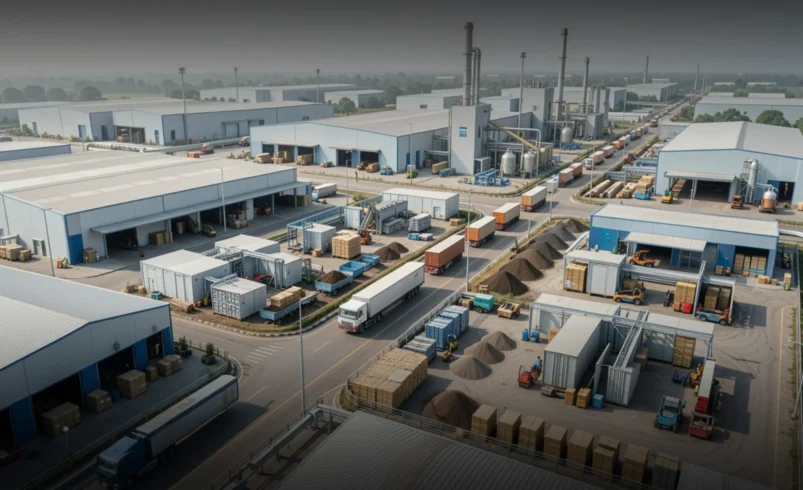

For years, global supply chains operated on one principle: source from the lowest-cost location and maximize scale. That formula is now changing. In 2026, businesses across the world are reassessing procurement strategies, reducing concentration risks, and actively building regional supplier networks. As this transition accelerates, Indian SMEs are finding themselves in a stronger position than ever before.
What was once considered a challenge of competing against global giants is gradually becoming an opportunity to become indispensable.
Large international buyers are increasingly moving toward supply chain localization and diversification. Instead of depending heavily on one geography, procurement teams are spreading sourcing across multiple countries and supplier sizes.
India is emerging as a preferred destination because of manufacturing capability, skilled workforce availability, improving infrastructure, and expanding digital business access.
For Indian SMEs, this shift may represent one of the biggest business opportunities of the decade.
Industries showing strong procurement movement include:
• Engineering and industrial goods
• Chemicals and raw materials
• Packaging and plastics
• Electronics and components
• Agriculture and food processing
• Textiles and apparel
• Machinery and industrial equipment
Global buyers are no longer evaluating suppliers only on production capacity.
Today they increasingly assess:
• Supply continuity
• Delivery predictability
• Communication responsiveness
• Digital presence
• Documentation readiness
• Flexibility in production
This change benefits SMEs.
According to Sustainability Magazine, 74 percent of business leaders now view resilience as a growth driver. Unlike larger organizations with longer approval chains, many Indian SMEs operate with faster decision-making and greater production flexibility. Buyers are recognizing this advantage.
However, opportunity alone does not guarantee business.
SMEs that want to participate in global procurement cycles must become operationally stronger.
Businesses preparing for growth are focusing on:
• Structured product catalogues
• Faster quotation turnaround
• Quality documentation
• Export readiness
• Supplier profiling
• Production planning
• Better inquiry management
Procurement expectations are also becoming more data-driven.
International buyers increasingly expect:
• Clear specifications
• Response discipline
• Reliable delivery commitments
• Visibility into production capability
Companies that cannot present themselves professionally may struggle to convert interest into orders.
Technology is playing a major role in this transition.
Digital platforms are helping SMEs:
• Reach international buyers
• Improve discovery
• Generate inquiries
• Track opportunities
• Reduce customer acquisition cost
Businesses that adopt digital selling methods are often expanding faster than those depending entirely on traditional referrals. Building visibility through a global b2b trade platform is becoming increasingly important for connecting with international buyers and strengthening market presence.
Another important shift is happening in buyer psychology.
Many international procurement teams are prioritizing long-term partnerships instead of short-term price negotiations. They prefer suppliers who demonstrate consistency and business maturity.
This creates a strong opening for SMEs willing to build structured operations.
Industry experts also believe smaller manufacturers should stop positioning themselves as “small companies” and instead communicate capability, specialization, and execution strength. This evolving sourcing environment closely aligns with the broader trends shaping global supply chain transformation across manufacturing ecosystems.
Localization does not mean local-only supply.
It means creating diversified, dependable, and regionally balanced sourcing ecosystems.
India appears well positioned to benefit.
What Indian SMEs Should Do Immediately
• Strengthen digital business visibility
• Build export-ready documentation
• Improve quotation response speed
• Create standardized product information
• Develop operational reliability
• Expand supplier credibility assets
• Prepare scalable fulfillment systems
The companies that move first may not simply win new orders.
They may become part of the next generation of global supply chains.