
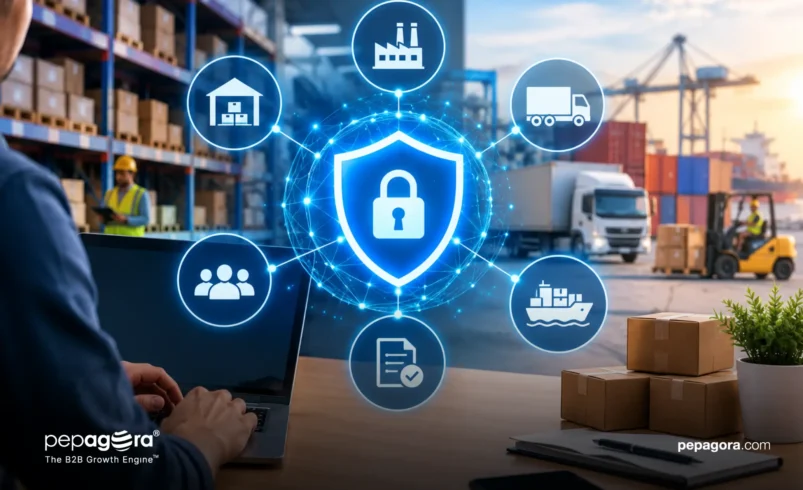

As organizations expand, their supply chains will become more interconnected. They might be dependent upon suppliers, logistics companies, cloud infrastructure, payment mechanisms, software providers, distributors, and other third parties to maintain operations.
At the same time, the interconnectivity makes the organizations vulnerable to cybersecurity threats. The organization may have robust cybersecurity internally, but they may still remain vulnerable due to some third party such as suppliers, software providers, account hacking, etc. According to NIST, Cybersecurity Supply Chain Risk Management is “the process of identifying, assessing, and mitigating supply chain risks to information and Information Systems.”
Therefore, for the expanding MSMEs, cybersecurity in the supply chain has become an important aspect of risk management.
Why Supply Chains Create Cybersecurity Risks
Any external connection that links up with a company’s system may pose yet another avenue of vulnerability.
This may involve a supplier accessing a shared portal, a logistics firm having customers’ data, or a software company processing any business data. If such an outside company does not have adequate security measures in place, it will become another entry point through which hackers can attack the rest of the systems.
A supply chain may face risks such as malware, compromised credentials, data breach, unauthorized access, tampering, and software/hardware vulnerabilities.
It becomes even more crucial for an expanding company to recognize these interdependencies.
Protect More Than Your Own Systems
Cybersecurity by tradition usually involves safeguarding the company’s own computers, networks, and applications. Supply chain cybersecurity demands a different approach.
It is necessary to determine:
- Which suppliers have access to the business’ systems
- Which information is shared with third parties
- Which vendors deal with customers’ or financial data
- Which software and cloud services are crucial for the business
- What will happen if there is a cyber attack on an important supplier
Just drawing a map of your suppliers and technologies will help the management identify their weak spots.
Evaluate Suppliers Before Giving Access
When selecting suppliers based on price, quality, and deliveries, it may not be sufficient when there is the issue of digital accessibility.
The company needs to ensure that the supplier practices basic cybersecurity measures before integrating it. This can be done by finding out whether the supplier implements multi-factor authentication, access control, software patches, data protection, and incident response.
The 2026 NIST due diligence guidance recommends using factors such as resilience, foundational cyber practices, provenance, and supply chain tiers when assessing the suppliers.
This does not mean that small businesses need to conduct thorough audits of all suppliers. This depends on the significance of the supplier and access to the supplier.
Limit and Monitor Third-Party Access
Each of the suppliers does not need access to all the enterprise’s systems.
It is advisable for companies to adhere to the user access principle and give each user/supplier just enough access based on the role. The access is supposed to be reassessed from time to time and revoked once a contractual relationship ends.
Authentication and access controls are crucial for MSMEs. According to CERT-In’s guidelines, stronger authentication and access controls are recommended for MSMEs.
Include Cybersecurity in Supplier Agreements
The expectations of cybersecurity should not stay informal.
In situations where this may apply, it is possible to include requirements in the contracts with major technology and service providers regarding data protection, access control, incident reporting, security standards, backup plans, and termination of access.
Clarification of security expectations will help the providers understand their responsibilities and will provide more ground for companies in dealing with cyber risks.
This issue was emphasized by NIST in the Cybersecurity Framework guidance.
Prepare for Supplier-Related Disruptions
The fact is that if one of your suppliers has been under attack from hackers, then you may face some negative consequences for your company despite the security of your system.
If logistics have been hacked, your deliveries may be delayed, and if a cloud solution is unavailable due to a cyber attack, order processing will be affected.
As a growing business, you need to develop basic contingency plans for critical suppliers.
Make Cybersecurity Part of Business Growth
Cybersecurity in supply chains must evolve with the business. With each new supplier, platform, employee, customer, and technology added to an MSME organization, the cyber risk profile also evolves.
Companies can begin with basic initiatives: having a supplier database, classifying essential suppliers, checking third-party access, setting a minimum standard of security, and reviewing key partners continuously.
In addition to these initiatives, CERT-In has developed 15 Elemental Cyber Defense Controls for MSMEs.
The topic of supply chain cybersecurity is important because in today’s world businesses are hardly ever operating independently. There are many connections between a business’ systems, data, third party suppliers and logistics companies.
For expanding MSMEs, cybersecurity involves moving outside of the internal network to examine the vulnerabilities that stem from relationships with third parties. In order to do so, it is crucial to evaluate the suppliers, control access, define security needs, prepare for possible disruptions and constantly analyze critical partners.
Cybersecurity is no longer an issue of IT specialists but an integral part of business protection.
FAQs
Supply chain cybersecurity helps MSMEs identify and manage risks that may arise from suppliers, logistics companies, software providers, cloud services, and other third parties connected to their business systems.
MSMEs can reduce risks by evaluating suppliers before granting access, using multi-factor authentication, limiting third-party access, applying access controls, monitoring critical vendors, and including cybersecurity requirements in supplier agreements.
An MSME should have a contingency plan for critical suppliers. This can include identifying alternative suppliers, reviewing third-party access, maintaining backups, understanding incident-reporting procedures, and preparing operational alternatives to reduce disruption.
