
As India’s business ecosystem becomes increasingly digital, verifying the identity and credibility of suppliers is emerging as an important requirement for B2B transactions. For micro, small and medium enterprises (MSMEs), the ability to establish their credentials quickly could influence access to buyers, procurement opportunities, financial services and wider business networks.
Traditionally, supplier verification has involved exchanging registration certificates, tax documents, licences, bank details and other business records. Buyers often conduct these checks separately, creating repeated documentation requirements and delays, particularly for smaller enterprises working with multiple customers.
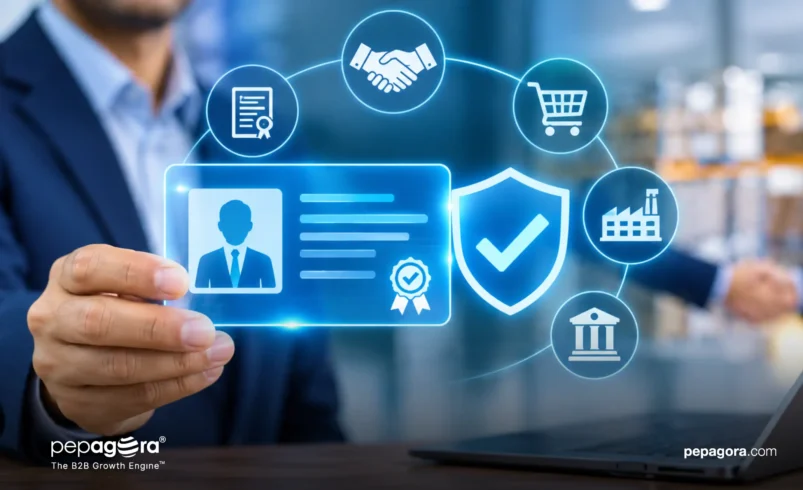
Verifiable credentials could change this process by allowing businesses to present digitally issued, authenticated records that can be checked by authorised parties. The approach could make business verification faster, more consistent and less dependent on manual document exchanges.
India’s Digital Commerce Ecosystem Moves Towards Verifiable Trust
The concept is gaining attention through India’s digital public infrastructure initiatives. The Open Network for Digital Commerce (ONDC), which aims to create an interoperable digital commerce ecosystem, has identified verifiable credentials as a forthcoming building block.
According to ONDC’s official website, its proposed verifiable credential system is designed to give sellers and network participants verified digital identities. It could make business registrations, government licences, quality scores and reputation information visible, verifiable and portable across the network.
This is significant for MSMEs because businesses often need to establish their credibility separately across different marketplaces and commercial networks. A portable credential system could reduce the need to repeat the same verification process whenever an enterprise joins a new network or approaches another buyer.
ONDC describes the proposed system as a two-layer trust mechanism, although its website currently lists verifiable credentials as a building block coming soon. Therefore, it represents a developing direction rather than an already operational universal verification facility.
Udyam Registration Provides a Foundation for Digital Identity
India already has an important foundation for establishing formal business identities through Udyam Registration.
The Ministry of MSME’s Udyam Registration Portal provides enterprises with a permanent Udyam Registration Number and an electronic registration certificate. The process is free, paperless and based on self-declaration, with Aadhaar and other applicable business details used during registration.
For MSMEs, this registration provides an official identity that can support participation in government schemes, procurement opportunities and formal business networks.
However, business registration alone does not establish every aspect of commercial credibility. Buyers may also need to verify GST information, relevant licences, quality certifications, product standards and supplier performance. Verifiable credentials could help bring these different forms of evidence into a more organised digital identity framework.
Digital business systems are also changing how enterprises manage their information. Digital workflows for MSME businesses highlight the growing importance of organised information and connected business processes.
Digital Procurement Is Increasing the Need for Reliable Verification
The growing use of online procurement is making supplier identity and business information increasingly important.
The India SME Forum’s Digital Bharat: India Digital Procurement Report 2026 estimated India’s MSME procurement economy at ₹124.9 lakh crore. The report found that 80.4% of surveyed MSMEs expected digital procurement to play a major role in business expansion over the following three years.
However, the transition also brings challenges. Buyers must assess suppliers they may not have previously worked with, while smaller enterprises need to demonstrate their legitimacy and capabilities to businesses outside their established networks.
A digital credential system could help address this gap by making essential business information easier to authenticate. For example, a manufacturer approaching a new industrial buyer could potentially share verified registration, certification and compliance credentials without repeatedly submitting separate documents.
The report’s findings indicate the scale of India’s digital procurement opportunity, while the proposed credential infrastructure could help strengthen the trust required for such transactions.
This development also connects with digital procurement opportunities for Indian MSMEs, where supplier discovery and business verification are becoming increasingly relevant.
Financial Services Could Also Benefit
The impact of verifiable business identities could extend beyond buyer-supplier relationships.
Financial institutions often require business registration records, financial statements, tax information and other documents when assessing MSME loan applications. Repeated verification can increase processing time and administrative costs.
India’s Account Aggregator framework provides an existing example of consent-based digital information sharing. Regulated financial information providers can share customer financial information with authorised financial information users through the framework, subject to customer consent.
As digital business credentials develop, verified enterprise information could potentially complement such systems by helping lenders assess business identity and eligibility more efficiently. However, business credentials and financial data sharing serve different purposes and would require appropriate safeguards and interoperability.
The wider adoption of digital payments for improved B2B cash flow also demonstrates how digital infrastructure can support smoother business transactions.
Data Security and Standardisation Remain Critical
Despite the potential benefits, wider adoption will depend on how securely credentials are issued, stored, shared and verified. Businesses must retain control over sensitive information, while buyers need confidence that the credentials they receive are authentic and current.
Common standards will also be important. If different platforms use incompatible verification systems, MSMEs could end up facing the same documentation burden in a different digital format.
For smaller enterprises, affordability and ease of use will matter as much as the technology itself. A complicated verification process could create another barrier instead of simplifying market access.
Towards a More Trust-Based B2B Ecosystem
India’s digital business infrastructure is gradually moving beyond online registration and transactions towards more connected systems of identity, verification and information exchange.
For MSMEs, verifiable credentials could make it easier to establish credibility, approach unfamiliar buyers and participate in wider procurement networks. They may also reduce repetitive administrative work and improve confidence between businesses that have no prior commercial relationship.
The technology is still developing, and its impact will depend on implementation, adoption and data protection standards. However, the direction is clear: as B2B commerce becomes increasingly digital, the ability to prove business identity and credentials could become an important part of how Indian MSMEs build trust and compete in the marketplace.
FAQs
Verifiable credentials are digitally issued and authenticated records that allow businesses to prove information such as registration, licences, certifications and other business details to authorised parties.
Digital identity can help MSMEs simplify supplier verification, reduce repeated documentation, establish business credibility and improve access to buyers, procurement networks and financial services.
ONDC's proposed verifiable credential system aims to provide portable digital identities for sellers and network participants, making business registrations, licences and reputation information easier to verify across compatible applications.

About Author
Harsha Varthan
Harsha is a highly respected B2B marketing expert who passionately helps sellers and buyers connect, grow their businesses online, and build strong global visibility. His expertise spans SEO, content marketing, lead generation, marketplace strategy, public relations, and result-driven digital growth planning, making him a trusted voice in the industry.