

The Union Budget 2026 has placed health and personal care MSMEs at the centre of its growth strategy.
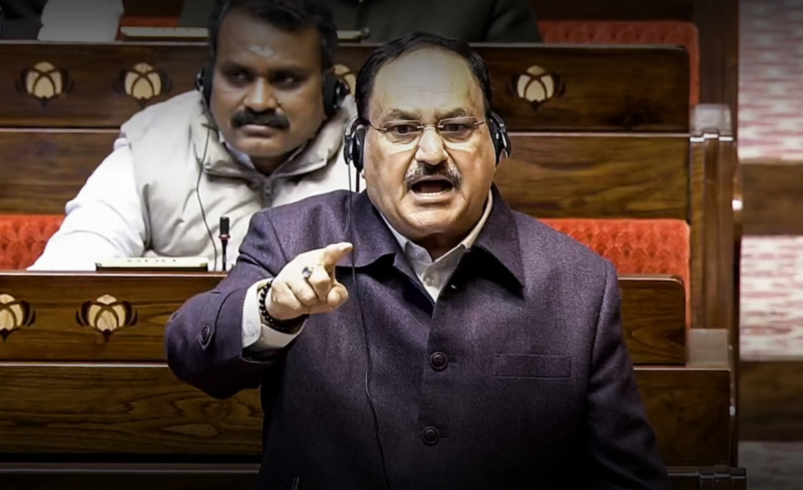
The Ministry of Health and Family Welfare, currently headed by J.P. Nadda, will oversee sectoral policy alignment related to health manufacturing and regulatory compliance.
The Union Budget 2026 has placed health and personal care MSMEs at the centre of its growth strategy, announcing expanded expense-credit access through the SME Growth Fund.
The move targets small manufacturers, formulators, and contract producers struggling with high working-capital costs and compliance driven expenses.
What the SME Growth Fund expansion means
Under Budget 2026, the SME Growth Fund has been strengthened to provide easier, faster credit for operational expenses such as raw materials, packaging, testing, and certifications—key cost heads for health and personal care businesses. The fund is routed through SIDBI-backed lending channels under the supervision of the Government of India.
Key budget numbers at a glance
- MSMEs contribute 30% of India’s GDP and ~45% of total exports
- Over 3 crore MSMEs operate across India, employing 11+ crore people
- Health and personal care is among the top 5 MSME-driven manufacturing segments
- Formal MSME credit growth averaged 13–14% annually in recent years
Challenges MSMEs faced before Budget 2026

Before this expansion, health and personal care MSMEs faced structural hurdles:
- High upfront costs for quality testing, GMP compliance, and certifications
- Limited access to unsecured working-capital credit
- Dependence on short-tenure loans with higher interest rates
- Delays in receivables from distributors and export partners
These constraints particularly affected small personal care brands and third-party manufacturers.
How Budget 2026 changes the landscape
The new provisions aim to ease liquidity pressure by allowing MSMEs to finance operational expenses rather than only asset creation. For health and personal care units, this improves cash flow across production cycles, supports batch-based manufacturing, and enables compliance with domestic and global standards.
Impact on SMEs, MSMEs, and job creation
With better expense-credit availability, SMEs and MSMEs are expected to:
- Scale production without equity dilution
- Invest in R&D and formulation upgrades
- Formalise operations and improve credit scores
- Generate employment in manufacturing, packaging, and logistics
The sector already supports millions of semi skilled and entry level jobs across manufacturing and services. With stronger financing access, health and personal care SMEs are also expected to expand production capacity and workforce size. Improved credit flow is projected to accelerate hiring, especially in fast growing consumer driven segments.
Global trade and India’s international positioning
India’s health and personal care exports, ranging from herbal products to dermatological formulations have grown steadily, driven by demand from Asia, Africa, and the Middle East.Policy oversight for public health standards continues under J.P. Nadda.
Budget 2026’s credit push strengthens India’s reliability as a manufacturing hub, improving trade relationships and supporting India’s broader economic diplomacy.
Political and economic significance
Politically, the move aligns with India’s long-term MSME-first development agenda. Economically, it reinforces domestic manufacturing while supporting export competitiveness. By focusing on expense credit, Budget 2026 addresses a long-standing MSME demand, making growth more sustainable rather than debt-heavy.
The road ahead
Budget 2026’s expanded SME Growth Fund is expected to unlock momentum for health and personal care MSMEs, improving liquidity, compliance readiness, and global reach. If implemented efficiently, it could mark a structural shift in how India finances small-business growth.