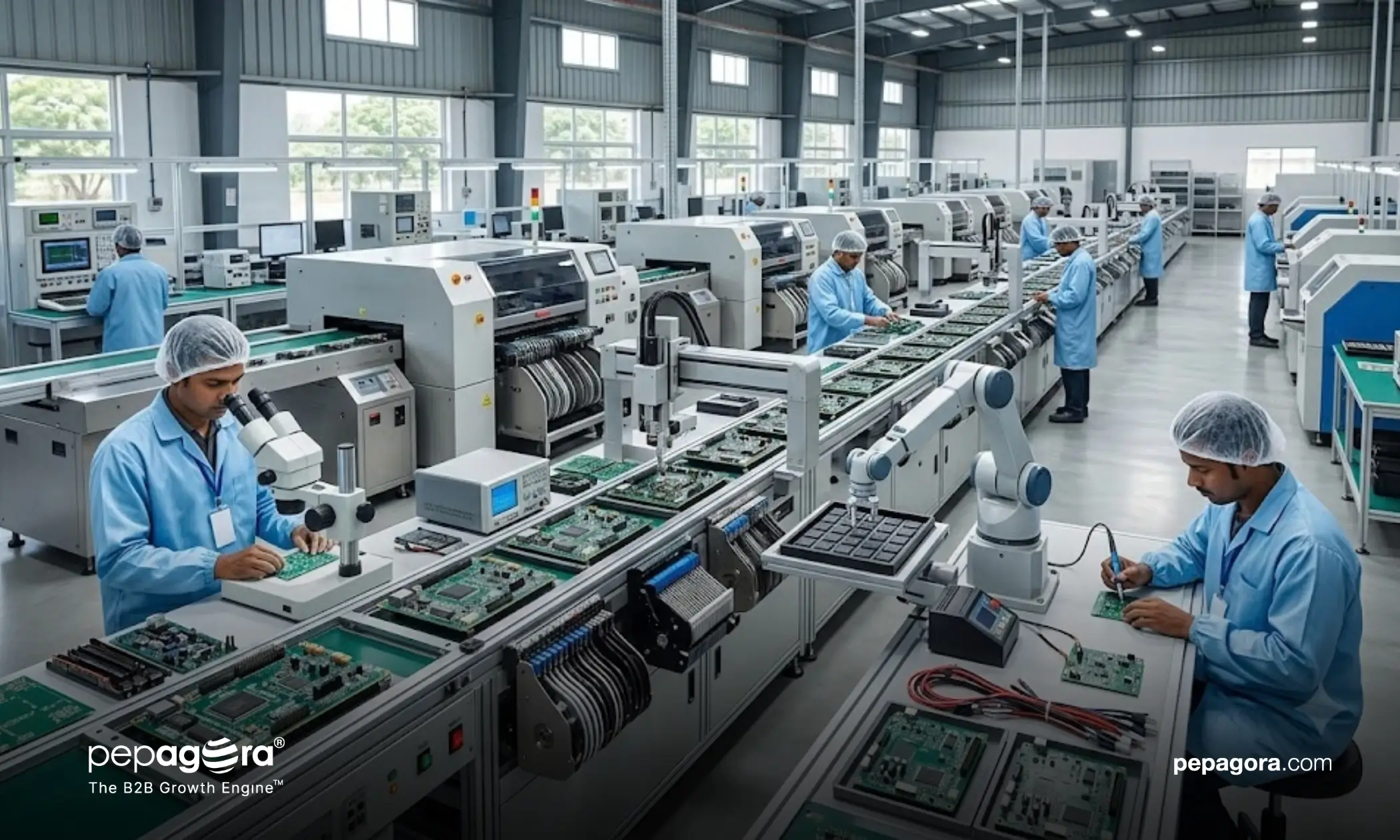

For decades, manufacturers have collected information about production, machines, inventory, quality and orders. But much of this information remained on paper, spreadsheets or disconnected systems.
That is changing. As factories adopt sensors, connected machines, enterprise software and digital monitoring tools, factory-level information is becoming easier to capture and analyse.
For MSMEs, this data can become more than an operational record—it can become a business asset.
NITI Aayog has highlighted that manufacturing data remains fragmented across OEMs, MSMEs and other stakeholders, limiting the ability of AI and digital technologies to deliver end-to-end visibility and optimisation.
What Is Industrial Data?
Industrial data refers to information generated throughout manufacturing and industrial operations.
It can include:
- Machine performance and downtime
- Production volumes and cycle times
- Energy and resource consumption
- Quality and rejection rates
- Inventory and raw-material usage
- Maintenance records
- Order and delivery information
- Worker and process productivity
When this information is collected consistently and connected across operations, manufacturers can build a clearer picture of how their factories actually perform.
Why Factory Data Is Becoming Valuable
Better Production Decisions
Production managers often have to make decisions about scheduling, capacity and resources using incomplete information.
Real-time or regularly updated factory data can show where production is slowing down, which machines are underused and where bottlenecks are developing. This allows businesses to make decisions based on actual operating conditions rather than assumptions.
Predictive Maintenance
Machine downtime can disrupt production and increase costs.
Data from machines can help manufacturers identify unusual temperature, vibration, performance or usage patterns. Over time, this information can support predictive maintenance approaches, allowing businesses to address potential problems before they become major breakdowns.
For MSMEs, even small improvements in machine utilisation can have a meaningful effect on production capacity.
Improved Quality Control
Factory data can help businesses identify where defects and rejections are occurring.
By connecting quality information with machines, materials, batches and production processes, manufacturers can identify recurring patterns and investigate their causes.
The Ministry of MSME’s Lean initiative specifically promotes improvements in rejected rates, process and product quality, productivity and digital empowerment.
More Accurate Costing
Manufacturers often estimate product costs using standard assumptions for material, labour, energy and machine usage.
Actual factory data can provide a more accurate picture of these costs. This can help businesses identify inefficient processes, improve quotations and understand which products or orders generate better margins.
Stronger Supply Chain Visibility
Industrial data becomes even more valuable when connected with purchasing, inventory and customer information.
Manufacturers can identify changing material requirements, monitor supplier performance and improve production planning. This can reduce the risk of both stockouts and unnecessary inventory.
NITI Aayog has identified supply-chain enhancement, technology adoption and AI integration as important areas for improving MSME competitiveness.
This is also connected to the growing importance of a business data view, where production, inventory and other business information can work together.
From Data Collection to Business Intelligence
Simply collecting data does not automatically create value.
Manufacturers need to decide which information matters and how it will be used. A small factory, for example, could begin by tracking machine downtime, rejection rates, production output and energy consumption.
Once reliable data is available, dashboards and analytics can turn those numbers into actionable insights.
The next step could be using AI for applications such as demand forecasting, anomaly detection, predictive maintenance or production optimisation.
How MSMEs Can Start
MSMEs do not need to build a fully connected smart factory overnight. A practical approach is to start with one operational problem.
Businesses can:
- Digitise important production records.
- Connect critical machines where feasible.
- Standardise how data is recorded.
- Create simple performance dashboards.
- Integrate production data with inventory and finance systems.
- Gradually introduce analytics and AI.
NITI Aayog has also proposed shared digital infrastructure such as cloud-based manufacturing platforms, data lakes and digital twins to make advanced technologies more accessible to MSMEs without requiring large upfront investments.
For businesses beginning this transition, implementing modular tools like modular ERP or adopting essential digital tools can support structured operations and improve overall access to business information.
Data Can Become a Competitive Advantage
As manufacturing becomes more connected, the value of a factory will increasingly depend not only on its machines and workforce but also on how well it understands its own operations.
A manufacturer that knows exactly where it loses time, materials, capacity and quality can respond faster than one relying entirely on manual records.
Industrial data is becoming an important foundation for modern manufacturing. For MSMEs, factory-level information can improve production planning, maintenance, quality, costing, inventory management and supply-chain visibility.
The goal is not to collect every possible data point. It is to capture the right information, connect it to business decisions and gradually turn operational data into manufacturing intelligence. As Indian manufacturing becomes more digital, this ability can become an increasingly important business asset.
FAQs
Industrial data refers to information generated throughout manufacturing and industrial operations, including machine performance, production volumes, energy consumption, quality, inventory, maintenance and orders.
Industrial data can help MSMEs understand how their factories perform and support better decisions related to production, maintenance, quality, costing and supply-chain management.
Machine data such as temperature, vibration, performance and usage patterns can help manufacturers identify unusual conditions and address potential problems before they become major breakdowns.

About Author
Harsha Varthan
Harsha is a highly respected B2B marketing expert who passionately helps sellers and buyers connect, grow their businesses online, and build strong global visibility. His expertise spans SEO, content marketing, lead generation, marketplace strategy, public relations, and result-driven digital growth planning, making him a trusted voice in the industry.