
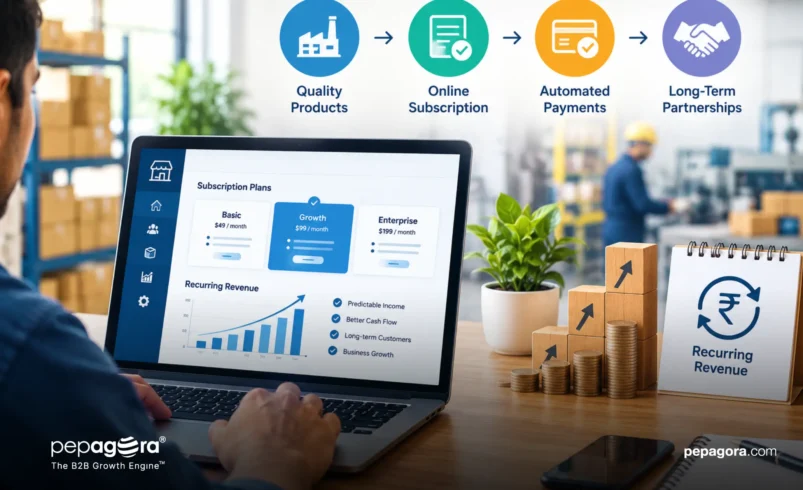

Indian MSMEs Explore Recurring Revenue Beyond Traditional Sales
Indian micro, small and medium enterprises (MSMEs) could find new growth opportunities by moving part of their business towards subscription-based services, as recurring payments offer an alternative to relying entirely on individual orders and one-time transactions.
Traditionally, many small manufacturers, distributors and service providers have generated revenue whenever customers place an order or purchase a service. Subscription models introduce a different arrangement, under which customers pay at regular intervals for continued access to products, services, maintenance or support.
The approach is already established in software and digital services, but its potential applications extend to industrial maintenance, equipment servicing, consumables, business support and other recurring B2B requirements.
For smaller enterprises operating with limited financial resources, the model could provide greater visibility into future revenue. However, its success depends on whether businesses can deliver ongoing value that customers are willing to pay for repeatedly.
Digital Business Services Provide a Starting Point
Subscription-based software offers an established example of how businesses can generate recurring revenue. Instead of purchasing and maintaining an entire software system upfront, customers pay periodically to access services and receive updates or support.
A Securities and Exchange Board of India (SEBI) document examining small and medium enterprise-focused software-as-a-service businesses in the Indian B2B e-commerce sector described monthly subscriptions as a way for smaller businesses to access basic digital services without making large upfront investments in in-house solutions. Additional services could be charged separately or on a recurring basis.
The model is relevant to MSMEs developing services such as inventory management, accounting support, digital marketing, order management and business analytics.
It also illustrates how small technology providers can build continuing customer relationships rather than depending exclusively on individual software sales or implementation projects. Businesses can also consider cloud spending among SMEs when evaluating digital services and recurring technology costs.
Manufacturers Could Apply the Model to Maintenance and Supplies
The subscription approach is not limited to digital businesses. Manufacturers and industrial suppliers may be able to introduce recurring arrangements around products and services that customers need regularly.
For example, an equipment supplier could offer annual maintenance packages with scheduled inspections and defined support. A packaging manufacturer could agree to supply a customer’s estimated monthly requirements under a recurring contract. Businesses supplying industrial consumables could offer planned replenishment based on usage.
Such arrangements could help suppliers understand future demand and plan inventory, staffing and purchasing more effectively.
For buyers, predictable service schedules and agreed supply arrangements may reduce administrative work and the risk of running short of essential materials.
However, businesses would need to define service limits, delivery schedules, price revisions and cancellation conditions clearly to avoid disputes.
Recurring Revenue Could Improve Planning, but Cash Flow Is Not Guaranteed
One of the potential advantages of subscription contracts is improved revenue visibility. A business with several continuing customer agreements may be better positioned to estimate future demand than one relying entirely on unpredictable orders.
Recurring revenue, however, should not automatically be treated as guaranteed income. Customers may cancel contracts, delay payments or reduce their requirements. Businesses must also continue paying for materials, employees, maintenance and service delivery.
MSMEs considering subscriptions will need to evaluate customer retention, service costs, payment collection and the working capital required to fulfil ongoing commitments.
Pricing is another consideration. A subscription fee must cover the cost of delivering the promised service while remaining attractive to buyers. Underpricing a long-term contract can create financial pressure if operating costs rise. Exploring innovative financing solutions for SMEs can also help businesses understand options for managing funding requirements.
Digital Payments and Billing Can Support Adoption
Managing recurring contracts manually can become difficult as the customer base grows. Digital invoicing, automated payment reminders, customer databases and recurring billing systems can help businesses track renewals, outstanding payments and service obligations.
India’s digital payments ecosystem provides infrastructure that businesses can use to collect payments electronically. However, recurring collections require appropriate customer authorisation and a payment arrangement suited to the transaction.
MSMEs will also need to maintain proper invoices, tax records and contract documentation. Digital tools can simplify administration, but they cannot replace clear commercial terms or effective customer service. The wider shift towards digital platforms transforming B2B trade also highlights the role of digital tools in business transactions.
Hybrid Models May Suit Small Businesses Better
Rather than replacing one-time sales entirely, subscription arrangements may work best alongside existing revenue streams.
A manufacturer could continue selling machinery while offering maintenance contracts. An industrial supplier could retain individual orders while providing subscription-based replenishment to regular customers. A technology service provider could charge an initial setup fee followed by monthly support payments.
This hybrid approach allows businesses to test recurring revenue without abandoning established sales channels.
The model may be particularly useful where customers have predictable, repeated needs and where suppliers can deliver consistent service at a manageable cost. MSMEs can also consider opportunities for leveraging e-commerce to grow their businesses while maintaining their existing sales channels.
Outlook: From Individual Orders to Long-Term Relationships
Subscription models are unlikely to replace one-time B2B sales across India’s diverse MSME sector. Demand patterns, product categories and customer preferences vary considerably between industries.
Nevertheless, recurring contracts offer smaller businesses another way to build customer loyalty, improve demand planning and diversify revenue.
For Indian MSMEs, the key question is not whether every product should become a subscription. It is whether part of the business can provide continuing value through dependable supplies, maintenance, support or digital services.
Where that value is clear and commercially sustainable, recurring revenue could become a useful complement to traditional B2B sales.
FAQs
A subscription model allows a business to receive payments at regular intervals in exchange for continued access to products, services, maintenance or support.
Not entirely. Subscription models may complement traditional sales by creating recurring revenue from maintenance, supplies and ongoing services while businesses continue accepting individual orders.
Recurring revenue can improve sales forecasting, support inventory planning and help manufacturers schedule resources. However, these benefits depend on customer retention, payment collection and the cost of fulfilling contracts.
MSMEs should assess pricing, service delivery costs, working capital, customer cancellations, delayed payments and contract terms. They should also define renewal conditions, delivery schedules and cancellation policies clearly.
Businesses can use digital invoicing, payment systems, customer databases and automated reminders to track payments and renewals. Clear agreements and proper financial records remain essential for managing recurring contracts effectively.
