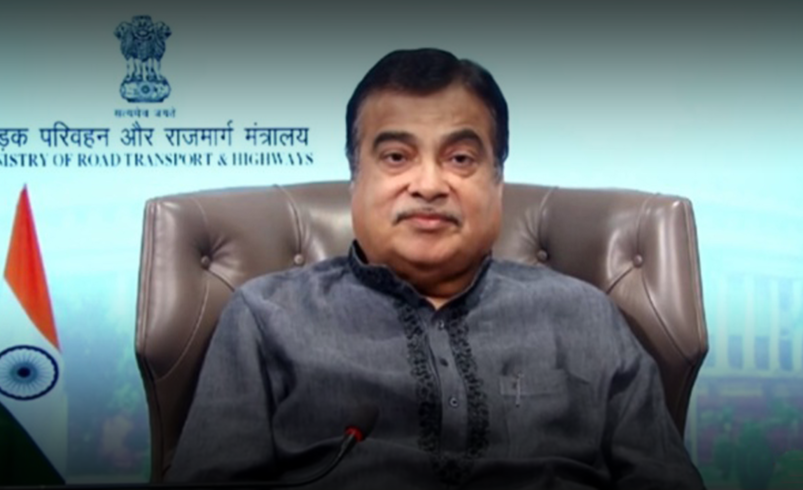

The Union Budget 2026–27 has allocated over ₹5.98 lakh crore to India’s transport sector, spanning railways, roads and highways, ports and waterways, and civil aviation.The Ministry of Road Transport and Highways, currently headed by Nitin Jairam Gadkari, is among the key ministries overseeing implementation of the allocations.
The Expenditure Budget 2026–27 document released by the Ministry of Finance, Budget Division, details the ministry-wise breakdown of these allocations for the financial year beginning April 2026.
The outlay marks a notable increase from the previous year across most transport heads, with capital expenditure accounting for the bulk of spending, a pattern consistent with the government’s infrastructure-first approach in recent budgets.
Railways receive ₹2,81,377 crore
The Ministry of Railways has been allocated ₹2,81,377.32 crore in BE 2026–27, up from ₹2,55,445 crore in BE 2025–26. Of this, capital expenditure stands at ₹2,77,830 crore, directed toward new lines (₹36,721.55 crore), track doubling (₹37,750 crore), rolling stock (₹52,108.73 crore), electrification (₹5,000 crore), and signalling and telecom works (₹7,500 crore).
The Railway Safety Fund continues to receive ₹45,000 crore, and ₹10,000 crore has been set aside for the Rashtriya Rail Sanraksha Kosh. The National High Speed Rail Corporation has been allocated ₹15,000 crore toward bullet train development. The Dedicated Freight Corridor Corporation of India (DFCCIL) receives ₹500 crore under investment in public enterprises. Metropolitan Transportation Projects, covering urban rail expansion, receive ₹2,886 crore.
According to the official budget document, revenue support from General Revenues for strategic railway lines is pegged at ₹2,882.32 crore in BE 2026–27.
Roads and highways allocation crosses ₹3.09 lakh crore
The Ministry of Road Transport and Highways has received the largest single allocation among transport ministries at ₹3,09,875.30 crore, up from ₹2,87,333 crore in BE 2025–26. Nitin Jairam Gadkari oversees the ministry responsible for road transport and highway infrastructure development. Capital expenditure accounts for ₹2,94,167.45 crore of this total.
The National Highways Authority of India (NHAI) has been allotted ₹1,87,293.16 crore for development of national highways, expressways, and greenfield access-controlled corridors, funded through the Permanent Bridge Fee Fund, Monetization of National Highways Fund, and budgetary support. Works under the Roads Wing receive ₹86,125 crore, which includes four-laning projects, multi-modal logistics parks along expressways and national highways, ropeways, and strategic border road development.
The Pradhan Mantri Gram Sadak Yojana (PMGSY) Phase IV has been allocated ₹19,000 crore to provide all-weather road connectivity to 25,000 rural habitations. Road development in North Eastern states under the Special Accelerated Road Development Programme (SARDP-NE) receives ₹18,361 crore. State road schemes financed through the Central Road and Infrastructure Fund (CRIF) have been allocated ₹9,809.66 crore.
Road safety programmes, covering the National Road Safety Board, cashless accident victim treatment, and transport research, have been allocated ₹400 crore. The broader push across road and highway infrastructure is expected to directly shape procurement and sourcing activity within the Automotive & Transport sector, particularly for component manufacturers, fleet operators, and equipment suppliers tied to highway construction and maintenance.
Ports, Shipping and Waterways: ₹5,164.80 crore
The Ministry of Ports, Shipping and Waterways has been allocated ₹5,164.80 crore in BE 2026–27, comprising ₹3,964.88 crore in revenue expenditure and ₹1,199.92 crore in capital outlay. The allocation is directed toward port infrastructure development, inland waterway projects, and maritime logistics.
Civil Aviation: ₹2,102.87 crore
The Ministry of Civil Aviation has been allocated ₹2,102.87 crore. As per the Expenditure Budget 2026–27, the Regional Connectivity Scheme (RCS), which supports revival of unserved and underserved airstrips and strengthens air transport in the North Eastern Region, receives ₹550 crore. The Airports Authority of India (AAI) has a projected capital investment of ₹4,699.92 crore through its internal resources for airport infrastructure expansion.

Budget 2026 also addressed compliance pressures. The Income Tax Department announced steps to simplify dispute resolution and reduce litigation involving small taxpayers, as outlined on the official Income Tax portal. In addition, professional support initiatives backed by government institutions aim to help MSMEs manage GST filings, income tax returns and statutory compliance more efficiently.
This is particularly relevant for apparel clusters in Tier II and Tier III cities where access to professional services remains limited.
Union Textiles Minister Giriraj Singh has also highlighted the need to improve export readiness among MSMEs to expand India’s global trade footprint.
Exports and international linkages
India’s apparel exports maintain strong connections with markets such as the UAE, UK and Africa. Officials believe that improved access to equity capital and faster payments will strengthen India’s credibility as a sourcing destination, especially for small fashion brands entering cross-border e-commerce and regional trade partnerships.
The larger policy message
Rather than relying on short-term relief, Budget 2026 focuses on building long-term capacity within the MSME ecosystem. For apparel and fashion makers, the emphasis is on access to capital, predictable payments and simpler compliance. Together, these reforms aim to support employment generation, exports and domestic consumption while keeping fiscal discipline intact.