
A recent article published on the New York Times shares some useful insight about Indian economy that all SME owners must know.
In a global economy often defined by sluggishness and uncertainty, India continues to tell a different story. According to the latest data, the world’s most populous nation is solidifying its position as the fastest-growing major economy, driven by a “double engine” of massive infrastructure spending and a resilient middle class.
However, as the government prepares to release its latest GDP estimates on February 27, the celebration is being tempered by a new set of global anxieties—most notably, the shifting trade policies in Washington.
The Numbers Behind the Surge
India’s economy is projected to grow by 7.4 percent for the current fiscal year. To put that in perspective, that is nearly double the growth rate seen in many Western nations. The momentum is largely “homegrown”:
• The Consumption Engine: From rural villages to urban hubs, Indians are spending more. This has been bolstered by a supportive environment of low inflation and recent tax cuts that have put more money back into people’s pockets.
• The Investment Engine: The government has doubled down on its “Viksit Bharat” (Developed India) vision, pouring billions into roads, railways, and renewable energy. Investment activity has surged past pre-pandemic levels, signaling a vote of confidence in the country’s long-term future.
The “Trump Tariff” Shadow
Despite the domestic boom, the view from New Delhi’s policy halls is increasingly focused on the horizon. Economists at Goldman Sachs and the United Nations warn that a new era of American protectionism could test India’s resilience.
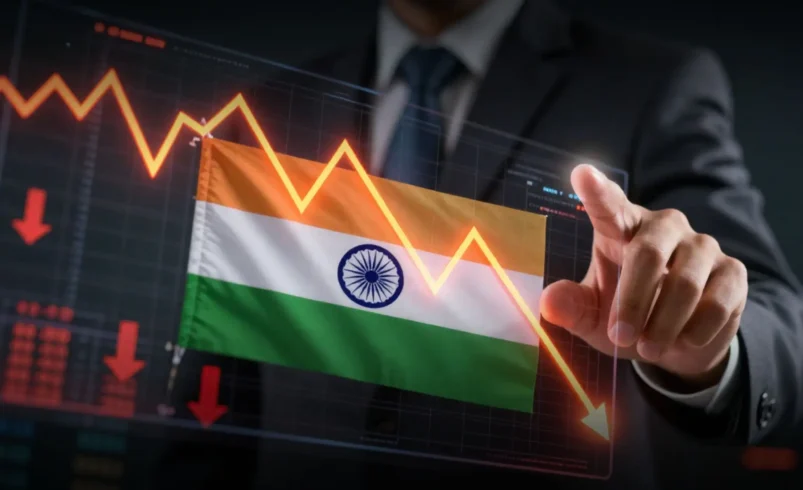
With the U.S. being a critical market for Indian software services and manufactured goods, the threat of higher tariffs has caused the Indian rupee to hit record lows against the dollar. “The paradox of 2026,” as noted in recent economic surveys, is that India is doing everything right internally, yet it is being buffeted by a global system that no longer rewards macroeconomic success with stability.
A New Statistical Identity
In a move to better reflect its modern identity—including a massive digital commerce sector that barely existed a decade ago—India is officially updating its economic “base year” to 2022-23. This statistical makeover, scheduled for release this Friday, aims to capture the true scale of India’s transition from an agrarian society to a global services and manufacturing powerhouse.
The Bottom Line
For now, India remains the “bright spot” of the global stage. But as it chases the ambitious goal of becoming a $5 trillion economy by 2029, its leaders are learning that being a global leader means being more exposed to global storms. The coming year will determine if India’s internal engines are strong enough to outrun the headwinds coming from abroad.
Join Pepagora, the verified B2B platform to stay ahead in sourcing and selling.