
If you’ve been waiting for the “historic” trade deal between India and the U.S. to become official, you’ll have to wait a little longer. While the deal was expected to be signed this month (March 2026), India’s Commerce Secretary, Rajesh Agrawal, has clarified that the actual signing will only happen once the U.S. settles its own internal “tariff architecture.”
Here is a simple breakdown of what’s happening:
Why the delay?
The original plan hit a snag because of a major legal shift in America. The U.S. Supreme Court recently struck down certain trade taxes (tariffs) that the Trump administration had previously put in place.
• The Result: Right now, the U.S. is essentially rebuilding its trade rules from scratch.
• India’s Stance: India wants to wait until these new rules are finalized. You wouldn’t sign a contract for a house if you didn’t know the final price; India is waiting to see the final “price list” (tariffs) the U.S. sets for the rest of the world before locking in their own special rates.
Is the deal in trouble?
No. Officials from both sides insist there is no “stand-off.” The two countries are still talking and ironing out smaller details like non-tariff barriers and specific rules for steel and aluminum. The delay is described as “constructive time” to make sure the final pact is solid.
What’s in it for India?
Under the framework agreed upon in February:
• Lower Taxes: The U.S. agreed to cut tariffs on Indian goods to 18% (down from as high as 25% or even 50% in some sectors). This gives Indian exporters a huge advantage over competitors like China or Vietnam.
• The Russian Oil Factor: The U.S. had previously added extra taxes because India was buying Russian oil. Under this deal, those extra penalties would be removed.
The “10% Factor”
Following the court ruling, the U.S. has temporarily moved to a flat 10% tariff on almost all countries for 150 days. Because India’s special “deal” rate was set at 18% when others were paying more, the math has changed. India is waiting to see how the U.S. sets its permanent rates to ensure the 18% rate still gives Indian businesses a competitive edge.
The Bottom Line:
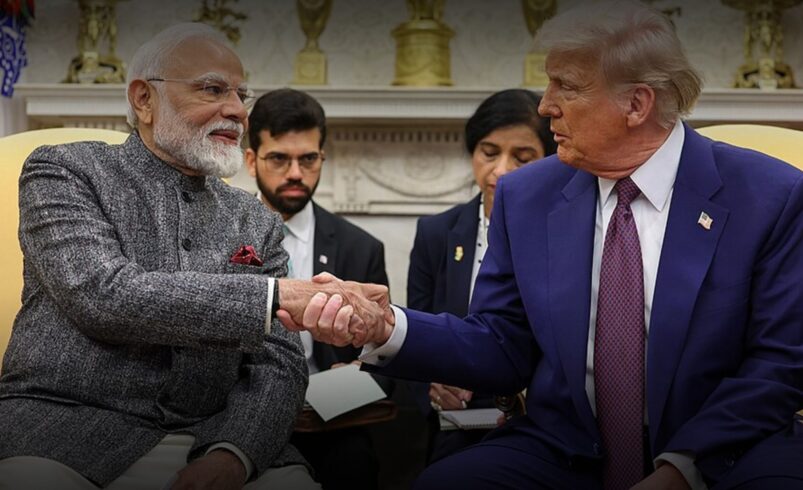
The deal is ready, the handshake has happened, but the paperwork is waiting for the U.S. to finish “redecorating” its trade laws. Expect the signing to happen once Washington’s new global tariff system is officially in place.