
For years, artificial intelligence was seen by many small businesses as an expensive technology reserved for large corporations with massive budgets and dedicated IT teams. In 2026, that perception is changing rapidly. Across India, SMEs are beginning to realize that AI is no longer just a futuristic experiment or operational expense. It is becoming a direct driver of productivity, efficiency, customer growth, and profitability.
From manufacturing units and exporters to distributors, retailers, logistics providers, and service companies, Indian SMEs are increasingly adopting AI-powered systems to reduce costs, automate repetitive work, improve decision-making, and compete more effectively in global markets.
Industry analysts estimate that AI adoption among SMEs in emerging economies is growing at double-digit rates annually, with automation and business intelligence tools becoming more accessible and affordable than ever before.
From exporters to manufacturers and distributors, businesses operating through a global b2b marketplace are increasingly using AI-driven systems to improve operational efficiency, buyer engagement, and international competitiveness.
SMEs Are No Longer Ignoring AI
According to Goldman Sachs, 76% of small businesses are already using AI, 93% say it has had a positive impact on their business, and only 14% have fully integrated it into core operations. This shows that many SMEs are no longer treating AI as a distant or optional technology.
Until recently, many SMEs viewed AI as:
• Too expensive
• Too technical
• Difficult to implement
• Relevant only for large enterprises
But cloud-based software, subscription models, and easy-to-use AI tools have changed the market completely.
Today, even small businesses can access AI-powered systems for:
• Customer support
• Inventory forecasting
• Sales automation
• Marketing optimization
• Financial analysis
• Production planning
This democratization of technology is making AI practical for businesses of all sizes.
Rising Competition Is Forcing Digital Transformation
One of the biggest reasons SMEs are adopting AI is competitive pressure.
Businesses today operate in an environment where customers expect:
• Faster responses
• Better service quality
• Accurate delivery timelines
• Personalized communication
• Efficient operations
Manual systems alone are no longer enough to meet these expectations consistently.
SMEs that fail to modernize risk losing customers to faster and more technology-driven competitors.
Manufacturing SMEs Are Seeing Immediate Benefits
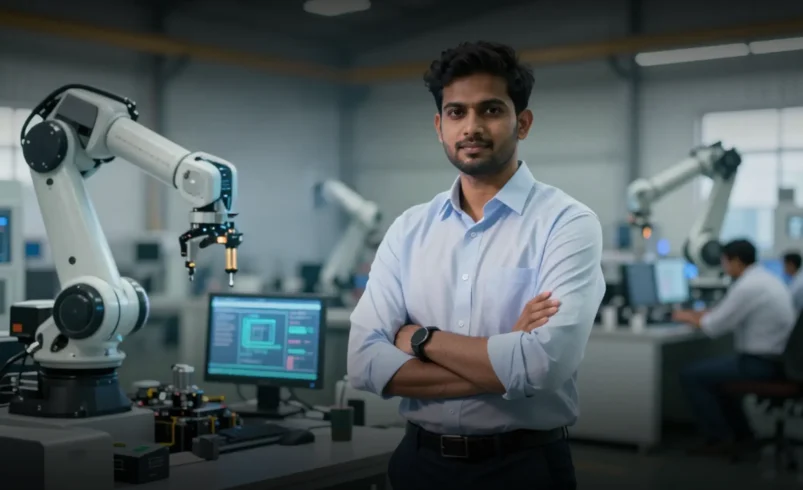
AI adoption is growing rapidly in manufacturing sectors.
Indian manufacturers are using AI for:
• Predictive maintenance
• Production scheduling
• Quality inspection
• Energy optimization
• Supply chain forecasting
These technologies help reduce downtime, minimize wastage, and improve operational efficiency.
Small factories that once depended heavily on manual monitoring are now using AI-powered analytics to identify operational bottlenecks before they become costly problems.
Industry experts believe smart manufacturing adoption among SMEs will accelerate significantly over the next five years.
The growing focus on AI Opportunities for Indian SMEs highlights how businesses across sectors are integrating automation to improve productivity, operational efficiency, and long-term scalability.
AI Is Reducing Operational Costs
One of the strongest drivers behind AI adoption is cost reduction.
SMEs are using automation to reduce:
• Manual data entry
• Customer service workload
• Inventory errors
• Delayed reporting
• Repetitive administrative tasks
Businesses that automate routine operations often experience:
• Faster execution
• Lower labor dependency
• Improved accuracy
• Better resource utilization
This transforms AI from a perceived expense into a measurable business advantage.
Customer Service Is Becoming Smarter
Many SMEs are implementing AI-powered customer communication systems.
These include:
• Automated chat support
• Smart lead qualification
• Instant response systems
• AI-assisted CRM tools
For export-oriented businesses and B2B companies, faster response time directly influences lead conversion and customer satisfaction.
AI is helping businesses remain responsive even with limited manpower.
AI in Sales and Marketing Is Growing Rapidly
Marketing is one of the fastest-growing AI application areas for SMEs.
Businesses are now using AI to:
• Analyze customer behavior
• Generate marketing insights
• Optimize advertising campaigns
• Improve email targeting
• Predict buyer preferences
This allows SMEs to compete more effectively against larger companies with bigger marketing budgets.
AI-driven digital marketing tools are helping businesses improve return on investment while reducing campaign wastage.
Inventory and Supply Chain Optimization
Inventory mismanagement remains a major challenge for many SMEs.
Excess inventory blocks working capital, while shortages lead to lost sales.
AI-powered forecasting systems help businesses:
• Predict demand patterns
• Optimize stock levels
• Reduce wastage
• Improve procurement planning
This is especially valuable for sectors such as:
• Retail
• Manufacturing
• Food processing
• Export trading
• Pharmaceuticals
Supply chain visibility is becoming a major competitive advantage.
Financial Decision-Making Is Improving
AI tools are increasingly being used for financial management.
SMEs are adopting systems capable of:
• Cash flow forecasting
• Expense analysis
• Invoice automation
• Fraud detection
• Credit risk assessment
Better financial visibility allows businesses to make faster and more informed decisions.
In a challenging economic environment, improved cash flow management can directly affect survival and growth.
Export Businesses Are Using AI for Global Expansion
Indian exporters are also adopting AI-powered solutions to improve international competitiveness.
AI tools help exporters with:
• Market analysis
• Buyer identification
• Pricing optimization
• Trade data insights
• Logistics planning
Businesses targeting Europe, the Middle East, and North America are increasingly using technology to strengthen export readiness.
AI is helping SMEs compete in markets where operational speed and data-driven decisions matter significantly.
The Human Workforce Is Changing, Not Disappearing
Despite fears surrounding automation, experts believe AI will not eliminate most SME jobs completely. Instead, it is changing how work is performed.
Employees are shifting toward:
• Higher-value problem solving
• Customer relationship management
• Strategic planning
• Technical supervision
Businesses adopting AI still require human judgment, creativity, and relationship-building capabilities.
The biggest challenge now is workforce upskilling.
Skill Gaps Remain a Major Challenge
While AI adoption is increasing, many SMEs still face talent shortages.
Common challenges include:
• Lack of digital skills
• Limited AI awareness
• Resistance to technology adoption
• Fear of implementation costs
Industry bodies and government programs are now emphasizing digital training for SMEs to improve adoption readiness.
Without skill development, technology investments may fail to deliver expected returns.
Government Push Is Accelerating AI Adoption
India’s broader digital transformation strategy is also supporting SME modernization.
Government initiatives promoting:
• Digital India
• Smart manufacturing
• Startup innovation
• Industry 4.0 adoption
are encouraging businesses to embrace advanced technologies.
Several MSME-focused programs now include technology upgrade support and digital capability development.
AI Is Becoming Affordable for Smaller Businesses
Earlier, AI implementation required major infrastructure investment.
Today, SMEs can access AI tools through:
• Subscription-based SaaS platforms
• Cloud computing services
• Affordable automation software
• No-code AI applications
This lower entry barrier is helping smaller businesses experiment with automation without massive upfront spending.
Cybersecurity and Data Risks Are Growing Concerns
As businesses digitize operations, cybersecurity risks are also increasing.
SMEs adopting AI must focus on:
• Data protection
• Secure cloud systems
• Cybersecurity protocols
• Employee awareness training
Digital transformation without proper security planning can create operational vulnerabilities.
What Successful SMEs Are Doing Differently
Businesses successfully benefiting from AI adoption typically follow a structured approach.
They focus on:
• Starting Small: Instead of large-scale implementation, they automate one business function at a time.
• Measuring ROI: They track productivity gains and cost savings carefully.
• Training Employees: Workforce readiness remains essential.
• Using Data Effectively: AI systems perform best when supported by accurate business data.
• Integrating Operations: Connected systems improve efficiency across departments.
AI Is Becoming a Profit Strategy
Perhaps the biggest shift happening in 2026 is mindset transformation.
SMEs no longer see AI only as an IT investment.
They now view it as a tool for:
• Revenue growth
• Faster scaling
• Customer retention
• Operational resilience
• Competitive advantage
This change is accelerating adoption across sectors.
The Road Ahead
Experts believe AI adoption among Indian SMEs will continue rising rapidly over the next decade.
As global competition intensifies, businesses that rely entirely on manual systems may struggle to remain competitive.
The next generation of successful SMEs will likely combine:
• Human expertise
• Digital systems
• AI-powered decision-making
• Automated operations
Technology adoption is gradually becoming a business necessity rather than a strategic option.
AI is no longer just a technology trend for large enterprises. It is becoming a practical business tool for Indian SMEs looking to improve efficiency, reduce operational pressure, and compete in faster-moving markets.
The companies that embrace AI intelligently and strategically are already seeing measurable gains in productivity and profitability.
For Indian SMEs in 2026, the conversation around AI is changing rapidly.
It is no longer about whether businesses can afford AI.
The bigger question is whether they can afford to ignore it.