
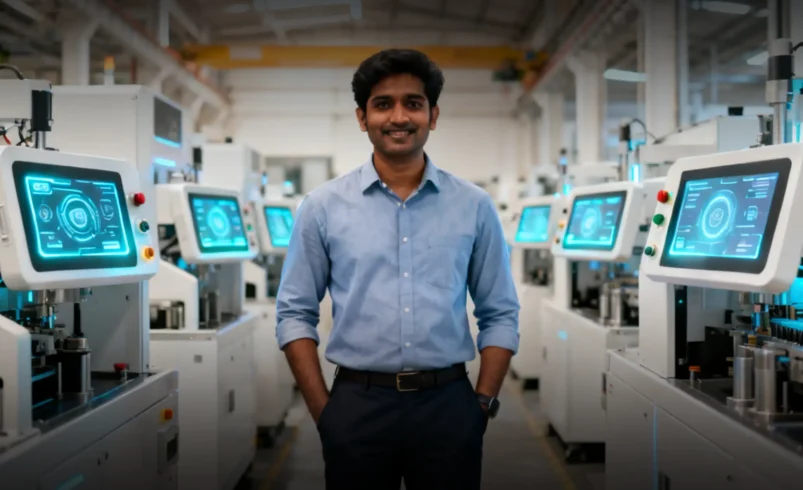

Indian small and medium enterprises are entering a new phase of industrial transformation driven by smart manufacturing and artificial intelligence reshaping production processes. What was once considered advanced technology reserved for large corporations is now becoming accessible to SMEs, driven by policy support, falling technology costs, and increasing global competition.
In 2026, the conversation is no longer about whether SMEs should adopt smart manufacturing. The focus has shifted to how quickly they can integrate these technologies to remain competitive in both domestic and export markets. Businesses leveraging Global B2B Marketplace are already gaining better access to technology providers and global buyers.
A Structural Shift in Manufacturing
Smart manufacturing refers to the integration of digital technologies such as artificial intelligence, machine learning, automation, and connected systems into production processes. For SMEs, this shift represents a move from manual, reactive operations to data-driven, predictive systems.
Recent industry estimates highlight the momentum:
• According to Economic Times, 53.8% of Indian MSMEs surveyed now use at least one digital tool, marking rapid transition toward smart manufacturing
• Over 35 percent of Indian SMEs have adopted some level of automation
• AI adoption in manufacturing is growing at more than 25 percent annually
• Early adopters report productivity gains of 15 to 30 percent
• Defect rates in automated systems have dropped by up to 40 percent
These figures indicate that smart manufacturing is quickly moving from early adoption to mainstream implementation.
Why SMEs Are Being Forced to Adapt
Global supply chains are evolving rapidly, and buyers are demanding higher quality, faster delivery, and full transparency.
Key pressures include:
• Increasing competition from technologically advanced manufacturers
• Demand for consistent quality and traceability
• Shorter product life cycles
• Rising labor and operational costs
SMEs that fail to modernize risk losing contracts and market share.
Key Technologies Driving the Transformation
Several technologies are at the core of smart manufacturing.
Key technologies include:
• Artificial Intelligence: AI enables predictive decision-making, helping businesses anticipate demand, detect faults, and optimize processes.
• Internet of Things: Connected sensors provide real-time data on machine performance, production efficiency, and energy usage.
• Automation and Robotics: Automated systems reduce manual intervention, improve precision, and increase production speed.
• Data Analytics: Advanced analytics convert raw data into actionable insights, enabling better planning and control.
Together, these technologies create a more efficient and responsive manufacturing environment.
Real Impact on SME Operations
The adoption of smart manufacturing is delivering measurable benefits across operations.
Key outcomes include:
• Reduced machine downtime through predictive maintenance
• Improved quality control using automated inspection
• Faster production cycles and reduced lead times
• Lower wastage and optimized resource utilization
These improvements directly translate into higher profitability and stronger competitiveness.
Government Push Accelerating Adoption
The government is actively encouraging SMEs to adopt advanced manufacturing technologies.
Key initiatives include:
• Incentives for technology upgradation
• Support for Industry 4.0 adoption
• Development of smart manufacturing clusters
• Training programs for digital skills
These efforts are aimed at reducing entry barriers and accelerating digital transformation across the SME sector, further driving smart manufacturing adoption among Indian SMEs.
Cost Barriers Are Gradually Declining
One of the biggest challenges for SMEs has been the cost of adopting advanced technologies. However, this is changing rapidly.
Factors contributing to lower costs include:
• Availability of cloud-based solutions
• Subscription-based software models
• Affordable automation tools
• Increased competition among technology providers
This allows SMEs to start with smaller investments and scale gradually.
Workforce Transformation and Skill Demand
The shift toward smart manufacturing is also changing workforce requirements.
Emerging skill needs include:
• Data analysis and interpretation
• Operation of automated machinery
• Maintenance of digital systems
• Process optimization and control
Upskilling and reskilling are becoming essential for SMEs to fully leverage new technologies.
Challenges Slowing Adoption
Despite the benefits, several challenges remain.
Common barriers include:
• Lack of technical expertise
• Resistance to change within organizations
• Integration issues with legacy systems
• Concerns about return on investment
Addressing these challenges requires a combination of strategic planning and external support.
Competitive Advantage in Global Markets
Smart manufacturing is becoming a key differentiator in global trade.
SMEs that adopt these technologies gain:
• Better alignment with international standards
• Increased trust among global buyers
• Ability to handle complex and high-value orders
• Improved supply chain integration
This positions them as reliable partners in global value chains.
Financial Gains Beyond Efficiency
While the initial investment may appear high, the long-term financial benefits are significant.
These include:
• Lower operational costs
• Reduced rework and defect-related expenses
• Higher production output
• Improved asset utilization
Over time, these gains contribute to stronger profit margins and sustainable growth.
What SMEs Should Do Now
Experts recommend a phased approach to adopting smart manufacturing.
Key steps include:
• Assessing current processes and identifying gaps
• Starting with pilot projects in high-impact areas
• Investing in employee training
• Partnering with technology providers
• Monitoring performance and scaling successful initiatives
This approach minimizes risk while delivering measurable results.
Industry Outlook: A Defining Moment for SMEs
The next few years are expected to be critical for the adoption of smart manufacturing in India.
Key trends include:
• Rapid increase in AI adoption across SMEs
• Expansion of smart manufacturing clusters
• Stronger integration with global supply chains
• Increased investment in digital infrastructure
These developments indicate a long-term transformation of the manufacturing ecosystem.
Smart manufacturing and artificial intelligence are no longer optional for Indian SMEs. They are becoming essential tools for survival and growth in a highly competitive environment.
The businesses that adopt these technologies early will gain a clear advantage in efficiency, quality, and market access. Those that delay risk falling behind in an increasingly digital and data-driven world.
For SME owners, the message is straightforward. The next big leap in manufacturing has already begun. The only question is how quickly they are ready to take it.