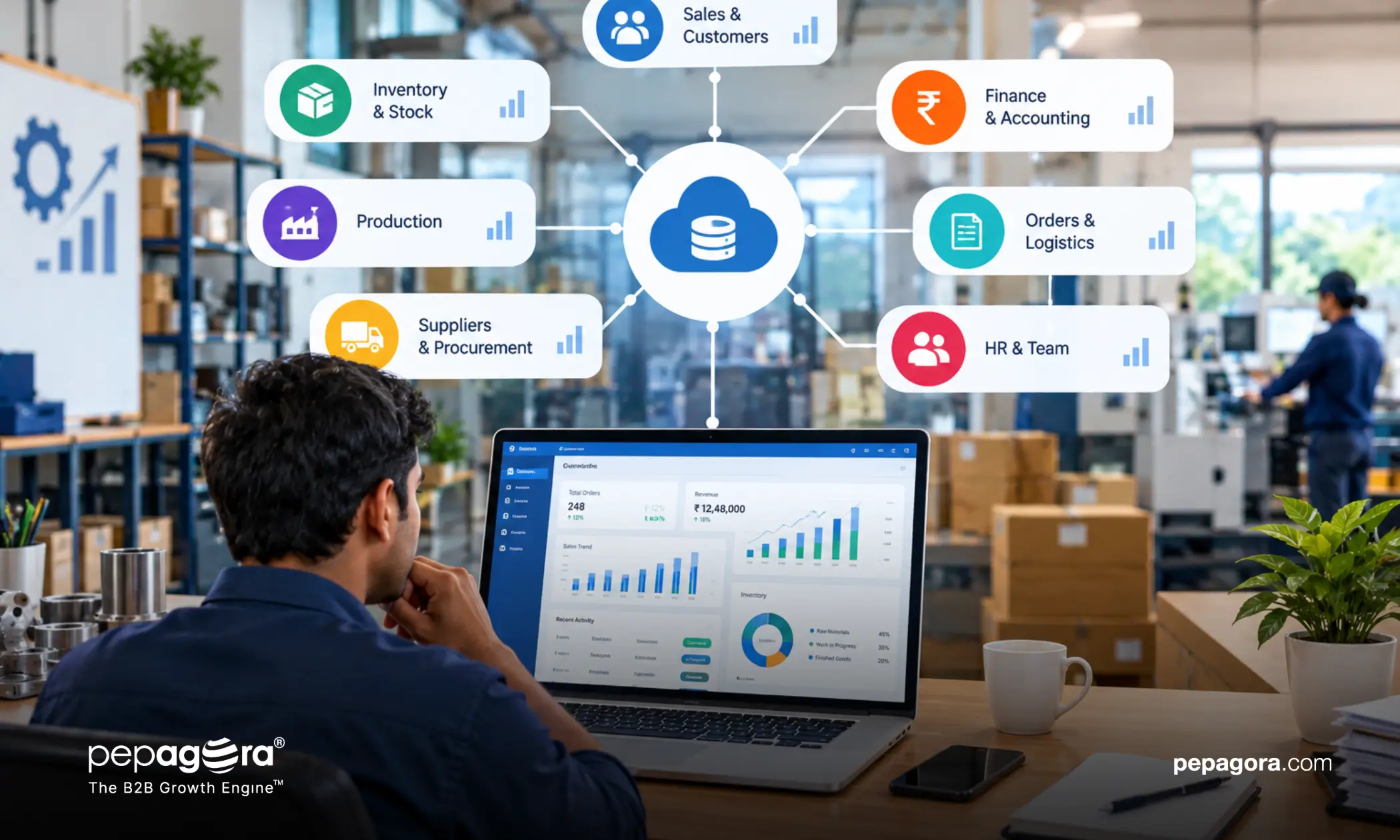

With the increasing use of websites, cloud apps, digital transactions, online marketplaces, e-mails, and connected devices by MSMEs, cybersecurity has emerged as a business need rather than just an IT issue. Digitalisation is becoming increasingly important for Indian SMEs, making cybersecurity an essential part of modern business operations.
Cyberattacks may lead to the disruption of business processes, exposure of customers’ information, compromise of financial data, and tarnishing of business reputation. According to CERT-In, MSMEs face many cybersecurity risks such as ransomware, DDoS attacks, website defacement, data breaches, and malware infections.
It is comforting to know that small businesses do not require costly cybersecurity systems. The use of basic security measures, employee training, and proper data management can go a long way in securing businesses digitally.
Identifying the Cyber Threats that MSMEs Face
It is common for cyber criminals to attack small firms since they are usually not equipped with adequate security measures.
Examples of some common threats are:
- Phishing attacks and spoofed payment emails
- Ransomware attacks that freeze company data
- Malware infections
- Password theft
- Email fraud
- Website hacking
- Theft of business data
- Cyber fraud through social engineering
Being aware of the above threats is the first step towards formulating a realistic cybersecurity strategy.
Make Passwords Strong and Secure
Password reuse is a risk because it allows hackers to get into business systems.
Strong passwords must be used along with enabling Multi-Factor Authentication (MFA) where possible. Also, there should be access control depending on the employee’s role. An individual working with sales data does not need to have access to the financial or administrative system, for example.
According to CERT-In, strong authentication, MFA, and role-based access controls are some key security steps MSMEs must follow.
Keep Software Up to Date
Old versions of the software can have vulnerabilities that will allow an attacker to exploit them.
Businesses should keep their OSes, web browsers, applications, web apps, security software, and other connected devices updated regularly. Automatic update options must be enabled when possible.
Also, businesses should uninstall any software, applications, or systems that do not meet business purposes anymore. According to the CERT-In guidelines for 2026, such practice remains highly relevant.
Protect and Backup Business Data
Business data can be customer data, invoices, employee data, financial data, product data, and intellectual property. Lack of such data is likely to result in serious disruption in operations.
Backups will be helpful to the business to restore data that has been lost due to any reason such as ransomware attack, accidental deletion, hardware failure, etc. The backups need to be stored independently of the network and the business needs to check periodically if its data can actually be recovered. A backup that has never been tested cannot be assumed to be a recovery strategy.
Train Employees to Spot Threats
The employees play a significant role in protecting the organization as many cyberattacks are started via a phishing mail, link, attachment, login request, etc.
The employees must be trained to spot any phishing, suspicious links, fraudulent invoices, unusual payment requests, and social engineering attacks. Employees must be made aware of the safe usage of AI systems as AI is used effectively in making phishing messages look more realistic. The growing adoption of AI among Indian SMEs also makes awareness around data protection and secure technology use increasingly relevant.
CERT-In suggests regular cybersecurity training and simulated cyber attacks for MSMEs.
Cybersecurity Incident Response Plan
It is not always possible to ensure that an attack will never take place even with effective security controls in place. This means that MSMEs should be prepared for an attack scenario.
An incident response plan will involve:
- The people who must be notified when there is an incident
- The systems that must be isolated
- How critical data will be restored
- Whom to notify your customers/partners about the situation
- Evidence and log preservation procedures
- When to contact cybersecurity experts from outside the organisation
All of these steps can help lower downtime and confusion in case of an attack.
Implement a Practical Security Framework
It is not necessary for MSMEs to develop a whole security programme on their own. CERT-In issued “15 Elemental Cyber Defense Controls for MSMEs” in September 2025, which can act as a foundation of security controls and guidelines that businesses can adopt to enhance their cybersecurity framework.
Businesses can begin with the controls mentioned and enhance their security with the growth in their digital operations.
The security of digital technologies has now become an integral part of operating a modern MSME. The protection of digital systems does not only imply the prevention of cyber-attacks from hackers but also securing business continuity, customer confidence, finances, and future development.
With the help of MFA implementation, software updates, access management, data backup, staff training, and incident response plan, the MSMEs are able to enhance digital resilience without creating an overly heavy load on its budget for the purpose of achieving that. Digital adoption is reshaping how SMEs operate and compete, making secure digital practices increasingly important for sustainable business growth.
The most effective strategy consists of starting with the basics and then improving security gradually.
FAQs
Cybersecurity helps MSMEs protect customer information, financial data, business systems, and digital operations from threats such as phishing, ransomware, malware, and data breaches.
MSMEs should use strong passwords, Multi-Factor Authentication (MFA), regular software updates, access controls, reliable data backups, employee training, and an incident response plan.
Yes. MSMEs can begin with practical measures such as MFA, software updates, secure passwords, regular backups, employee awareness training, and controlled access to business systems before gradually adopting more advanced security measures.