
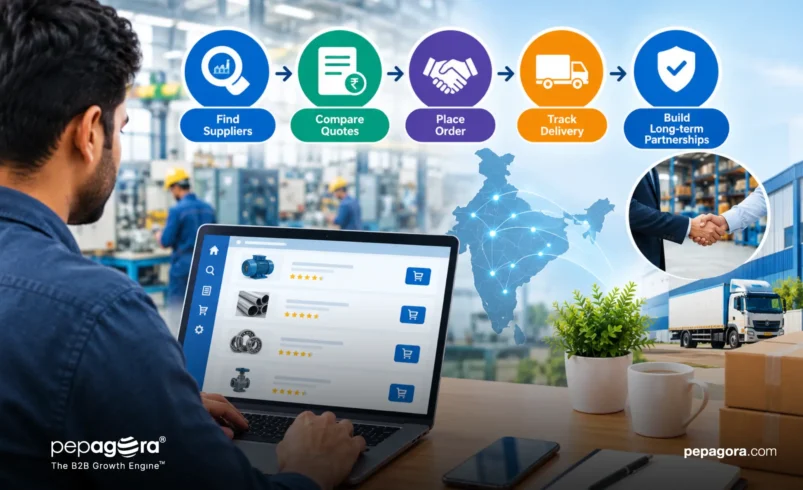

Indian MSMEs Move Towards Connected Digital Sales Processes
Indian micro, small and medium enterprises (MSMEs) are increasingly exploring digital tools to manage business transactions, as online procurement platforms and electronic documentation create opportunities to simplify the journey from customer enquiries to confirmed orders.
Traditionally, many smaller businesses have managed sales through phone calls, email exchanges, spreadsheets, messaging applications and manually prepared quotations. As transaction volumes grow, coordinating these activities can become time-consuming, particularly when multiple employees handle pricing, approvals, contracts, invoicing and dispatch.
Digital B2B workflows bring these activities into more connected systems, helping businesses track enquiries, prepare quotations, obtain approvals, maintain order records and coordinate fulfilment.
The opportunity comes amid rising interest in digital business transactions. The India SME Forum’s Digital Bharat: India Digital Procurement Report 2026, released in August, estimated India’s MSME procurement economy at ₹124.9 trillion. It found that 80.4% of surveyed MSMEs expected digital procurement to play a major role in business expansion over the following three years.
Quotations Become Easier to Prepare and Track
Preparing quotations is a critical stage in B2B sales, particularly for manufacturers, distributors and industrial suppliers dealing with customised requirements.
Digital quotation tools can help businesses use standard product descriptions, pricing structures, tax details and payment terms. Sales teams can revise offers, record customer responses and track pending quotations without repeatedly creating documents from scratch.
A centralised system can also help business owners identify which enquiries have received quotations, which offers require follow-up and which customers are ready to place orders.
For smaller enterprises handling several enquiries simultaneously, this visibility can reduce missed follow-ups and improve coordination between sales and operations teams.
Digital Approvals Help Shorten Order Cycles
In traditional sales processes, quotations may pass through several employees or departments before receiving approval. Delays can occur when pricing exceptions, discounts, credit terms or delivery commitments require management review.
Digital workflows can route these requests to the appropriate decision-makers and maintain a record of approvals. Once a buyer accepts an offer, the agreed specifications, quantities, prices and delivery conditions can be transferred into an order record.
This reduces the need to re-enter the same information at multiple stages and can help businesses identify discrepancies before production or dispatch begins.
The extent of automation depends on the software used and how effectively it integrates with existing business systems. Modular ERP systems can help MSMEs connect business processes as their operational requirements grow.
GeM Highlights the Shift Towards Digital Contract Management
India’s Government e-Marketplace (GeM) demonstrates how digital infrastructure is changing procurement and order administration.
In June 2026, the Ministry of Commerce and Industry reported that GeM had facilitated more than ₹8.69 lakh crore in procurement from micro and small enterprises since its launch. The platform supports online seller onboarding, bidding, digital contract management and end-to-end procurement processes.
Although GeM primarily serves public procurement rather than private-sector B2B sales, its digital processes illustrate how businesses can manage purchasing requirements and transaction records through structured online systems.
For MSMEs supplying government departments or public-sector buyers, familiarity with digital procurement procedures can be important for participating in tenders and fulfilling orders.
Invoicing and Payments Join the Digital Workflow
The sales process does not end when a contract is signed. Invoicing, payment tracking and reconciliation determine how quickly businesses convert completed sales into available cash.
Digital invoicing systems can help MSMEs generate consistent invoices, maintain transaction records and monitor outstanding payments. When connected with accounting or order-management software, they can also reduce repetitive data entry.
A significant policy development came in July 2026, when the Ministry of MSME announced that operating central public-sector enterprises would be required to route settlement of invoices for goods and services purchased from MSMEs through RBI-authorised Trade Receivables Discounting System (TReDS) platforms. The measure implements a provision announced in the Union Budget 2026–27 and is intended to improve payment discipline and access to invoice financing.
The development reinforces the growing role of digital systems in connecting procurement transactions with invoice settlement and working-capital management.
Adoption Challenges Remain for Smaller Businesses
Despite the potential benefits, digital workflow adoption requires investment in software, employee training and process changes. Some MSMEs may also face difficulties integrating sales tools with inventory, accounting or production systems.
Businesses can begin with practical steps, such as standardising quotation templates, maintaining a shared customer database and recording order status digitally. More advanced integration can follow as transaction volumes increase.
Data security, access controls and accurate recordkeeping will also be important as businesses move commercially sensitive information into digital systems.
Outlook: Connected Workflows Could Strengthen MSME Sales
As digital procurement expands across India, MSMEs have an opportunity to make sales processes more organised and transparent. Connecting quotations, approvals, contracts, invoices and order fulfilment can help businesses reduce administrative friction and maintain clearer records of customer commitments.
The transition is unlikely to eliminate personal relationships or negotiations from B2B trade. Instead, digital workflows can support these relationships by making transactions easier to track and manage.
For Indian MSMEs, the emerging competitive advantage may lie in combining strong customer relationships with faster responses, accurate documentation and dependable order execution.
FAQs
Digital B2B workflows help MSMEs manage enquiries, quotations, approvals, contracts, invoices and order fulfilment through connected systems, reducing manual work and improving transaction tracking.
Digital procurement helps MSMEs manage purchasing requirements, maintain transaction records, participate in online tenders and coordinate with buyers more efficiently.
Digital invoicing helps businesses track outstanding payments, while TReDS enables eligible MSMEs to access financing against approved trade receivables, helping them manage working capital.
