
Through online marketplaces, companies have been able to source products, suppliers, and customers effectively in recent times. In India, online marketplaces have been beneficial to MSMEs in accessing bigger markets and sourcing for their businesses more easily. Nevertheless, it’s time for companies, including Indian MSMEs, to think outside the box of only using marketplaces for sourcing purposes.
The future of sourcing is becoming more connected, data-centric, automated, and integrated into business processes. Digital procurement will be able to incorporate all these aspects of sourcing into one place including supplier discovery, product comparisons, quotation, communication, payment, inventory management, and purchase management.
This process is particularly crucial for Indian MSMEs considering that most of them do not have enough resources at their disposal. Therefore, the adoption of the right digital tools and processes is very critical for them.
Why Marketplaces Are Only the Beginning
It has made things easier for the discovery of suppliers, however, procurement entails more than that.
The steps involved in a normal procurement procedure include:
- Requirement identification
- Supplier identification
- Product comparison
- Quotation request
- Business verification
- Negotiation
- Order management
- Delivery coordination
- Payment processing
- Maintenance of supplier data.
It becomes a cumbersome affair when these processes take place in separate emails, Excel sheets, message systems, and so on. The future of procurement will thus have to look at integration of these processes rather than better product listings.
What Is Digital Procurement?
Digital Procurement is defined as the use of digital technologies in the purchasing and supplier-related processes.
This may involve solutions for:
- Supplier discovery.
- Purchase order management.
- Comparing quotations.
- Managing contracts.
- Monitoring inventory.
- Making payments digitally.
- Supplier communication.
- Data analytics.
- Automation of procurement process.
While unlike the conventional market space, the digital procurement system can integrate into the organizational process flow.
As far as MSMEs are concerned, procurement activities can be transformed from administrative tasks into data-centric processes.
The Shift from Product Search to Intelligent Sourcing
Classic markets rely primarily on searching for the goods or service providers by the users.Digital procurement systems that are currently developing may enable making procurement smarter.
Rather than spending a considerable amount of time on finding hundreds of providers, an organization may give a description of its needs in terms of goods’ specifications, the number, budget, etc. Thus, digital procurement systems will assist in finding appropriate providers and sorting the found variants.
It will allow saving time from routine search and evaluation of relevant providers.
How AI Could Transform Digital Procurement
Artificial intelligence will likely become even more important in the field of procurement.
AI-based technology may be able to analyze huge amounts of data related to suppliers, products, prices, and procurement processes.
Examples of how AI might help businesses include:
- Finding appropriate suppliers.
- Comparing quotes.
- Forecasting procurement needs.
- Identifying abnormal price fluctuations.
- Finding replacement suppliers.
- Communication automation.
- Analyzing suppliers’ performance.
AI-based procurement agents may in future carry out several steps of the procurement process according to set criteria.
Nevertheless, human intervention will still be required, especially in case of high value orders and key suppliers.
Digital Procurement Benefits for Indian MSMEs
Reduction in Administrative Effort
Manual procurement process requires lots of data input, reminders, comparison of quotations, and record-keeping.
Using digital technology could automate much of the effort and enable employees to engage in business development and vendor management activities.
Better Supplier Identification
Digital systems will provide MSMEs with increased access to a broader number of both local and foreign suppliers.
It could especially be beneficial for enterprises seeking to extend the reach beyond the current network of suppliers.
Enhanced Cost Control
The use of digital technology can assist companies in making price comparison and monitoring purchase costs.
Improved transparency can help enterprises to find areas where cost reduction is possible.
Quicker Purchasing Process
Once all of the data about supplier is collected into one workflow, companies will be able to make decisions faster.
It is especially useful in case of changes in market environment or inventory requirements.
Improved Relationship with Suppliers
Digital procurement will allow to keep record of purchases, interaction, delivery history, and any other information regarding suppliers.
This will help to build a history of relations with suppliers and will help to identify the best suppliers.
The Importance of Supplier Verification
As digital procurement grows in scale, the role of trust becomes more prominent.
While having a wide database of suppliers is valuable, it is critical that organizations are able to assess the genuineness of suppliers.
The process of verification enables assessment of the organization’s business credentials and helps reduce any uncertainty involved in the process of supplier discovery.
All these factors can assist Indian MSMEs in making informed buying decisions when seeking to procure from unknown businesses.
Thus, digital procurement platforms must work towards building trustworthy business ecosystems in addition to buyer-supplier connections.
Data Will Become a Procurement Asset
Another key strength of digital procurement is the sheer quantity of data that can be generated.
The data from procurement activities can help organizations gain insights into:
- Supplier performance.
- Purchasing frequency.
- Trends in prices.
- Demand for products.
- Performance in delivery.
- Patterns of spending.
- Need for inventory.
This data can then enable better planning.
For instance, if data analysis reveals that a specific raw material consistently experiences an increase in prices at certain times, an organization may be able to make its procurement decisions more intelligently.
Thus, data analytics can transform procurement into business intelligence.
Connecting Procurement with Inventory Management
Purchasing decision-making processes are related to the inventory process.
The traditional process of purchasing involves the use of fixed schedules and manual inventory counts. Information can be provided instantly regarding inventory stocks and purchase needs through digital means.
With the integration of the procurement and inventory systems, companies have the ability to:
- Determine products that have low stock levels.
- Avoid over-ordering.
- Plan for the inventory.
- Monitor lead times.
- Anticipate future needs.
Digital Payments and Documentation
Payment and documentation are one other aspect of procurement that is getting digitized as time goes by.
Digitization of invoices, electronic purchase orders, online payments, and digital documentation can ease paperwork and transactional tracking processes.
For MSMEs, having organized digital documentation can help in making financial reporting simpler and easy to understand outstanding payments and purchase costs.
With more businesses operating outside geographic boundaries, digital documentation becomes even more crucial.
Cross-Border Procurement Opportunities
Another way that digital procurement can assist Indian MSMEs is that it will help them enter into international procurement processes.
Companies can use digital tools to find foreign suppliers, evaluate their options, and interact with their international partners.
Conversely, Indian companies can join the ranks of international procurement by creating an adequate digital profile for themselves and describing their products.
Nonetheless, when dealing with international procurement, one has to consider several other factors, such as customs, regulations, currency, logistics, tariffs, and risk management.
Cybersecurity and Data Protection
Digitization also brings new threats.
These can be procurement systems that include sensitive information like supplier prices, contractual agreements, purchase quantities, customer data, and financial information.
The Indian MSMEs must take into consideration the following aspects in their procurement:
- Good password policies.
- Access controls.
- Safe payment methods.
- Software upgrades.
- Cybersecurity training for employees.
- Data backups.
- Critical analysis of third-party systems.
How MSMEs Can Prepare for the Future
It is not necessary to overhaul their entire procurement system in a short while.
A simple step towards the process is starting small.
Firstly, Digitize Your Records
Transfer information about suppliers, quotations, purchases, and inventory from disorganized documents into digital format.
Standardize Supplier Information
Keep consistent records on supplier capabilities, products, prices, qualifications, delivery performance, and contact information.
Eliminate Repetitive Tasks
Find out what tasks are repetitive and automate them such as comparing quotations, sending reminders, purchasing, and reporting.
Analyze Your Data
Look at your procurement data periodically for any pattern in expenses, performance of suppliers, and future needs.
Gently Introduce AI
Start small with risk-free uses of artificial intelligence such as data analytics, supplier research, prediction, and administration.
The Future: From Marketplaces to Procurement Ecosystems
The future of B2B procurement will probably not be characterized by a centralized marketplace alone.
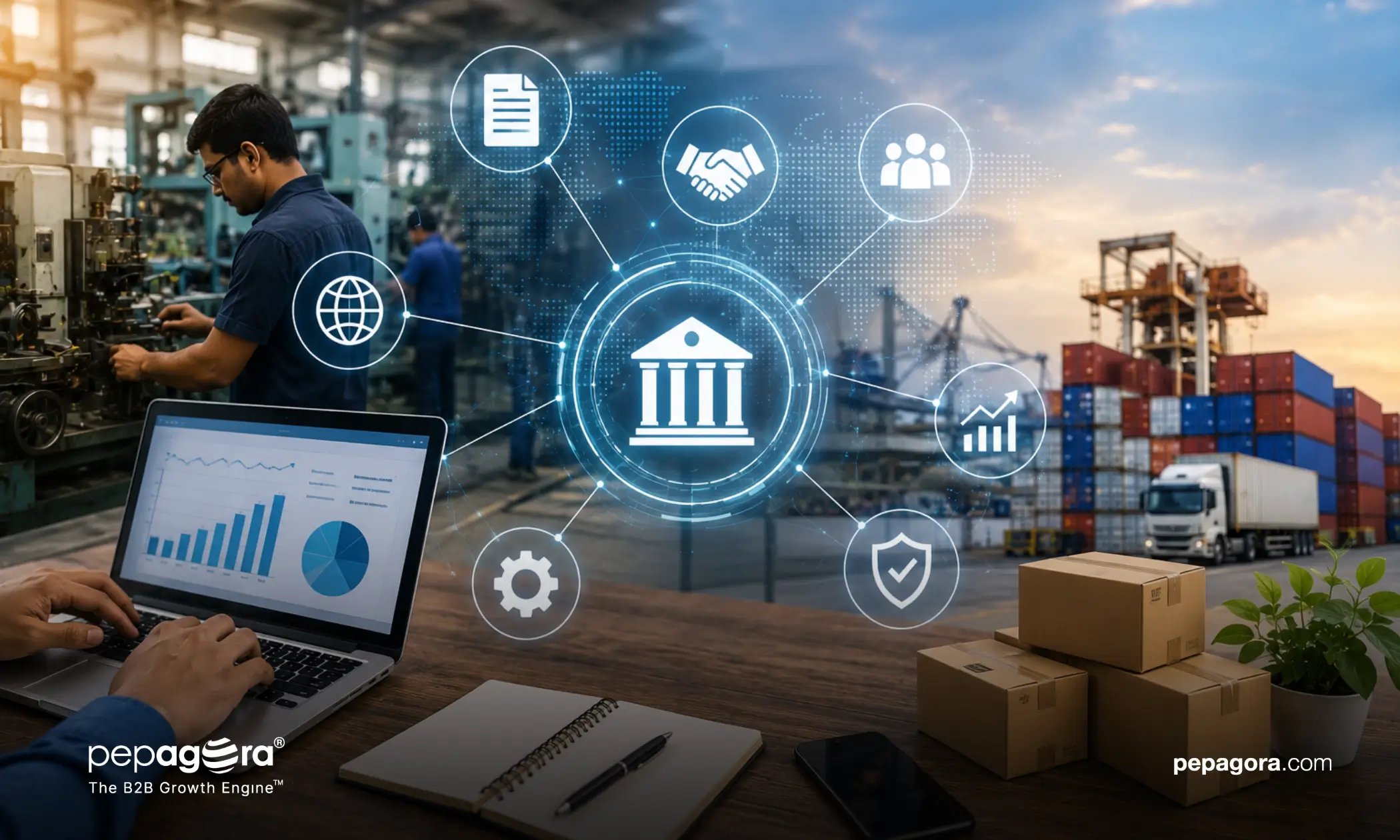
Instead, companies might end up working in connected digital procurement ecosystems which will enable the connection between supplier discovery, validation, communication, payments, inventory, analytics, and AI recommendations.
This can make procurement processes more proactive.
Instead of waiting for the employees to realize that the stock is almost finished, the connected ecosystem would be able to recognize the need and offer appropriate suppliers. Instead of having to go through dozens of quotations on their own, people would get the choices organized and sorted out using AI.
People would be left with overseeing and negotiation tasks.
The future of Digital Procurement is evolving beyond mere online marketplaces. In India, the future will lie in interconnected technologies encompassing supplier search and verification, data, automation, inventory management, payments, and AI-supported decision-making for the MSMEs.
This change could bring a number of benefits to smaller companies by helping them save on admin work, improve procurement efficiency, keep costs down, and develop better relations with suppliers. This could open up chances for participating in larger national and global supply chain networks.
Yet, digital procurement cannot succeed only through the use of innovative technologies. Organizations require accurate data, digital capabilities, cybersecurity measures, and knowledge of when digital technologies can bring real value.
Marketplaces might have kicked off the digital procurement movement, yet the future is likely to be much wider. For MSMEs ready to update their procurement
FAQs
Digital procurement uses technology to manage sourcing, purchasing, suppliers, payments, and inventory.
It helps reduce manual work, save time, control costs, and improve supplier management.
Yes. AI can help compare quotes, find suppliers, forecast demand, and analyze procurement data.
digitally, this change might become the key basis for future success.