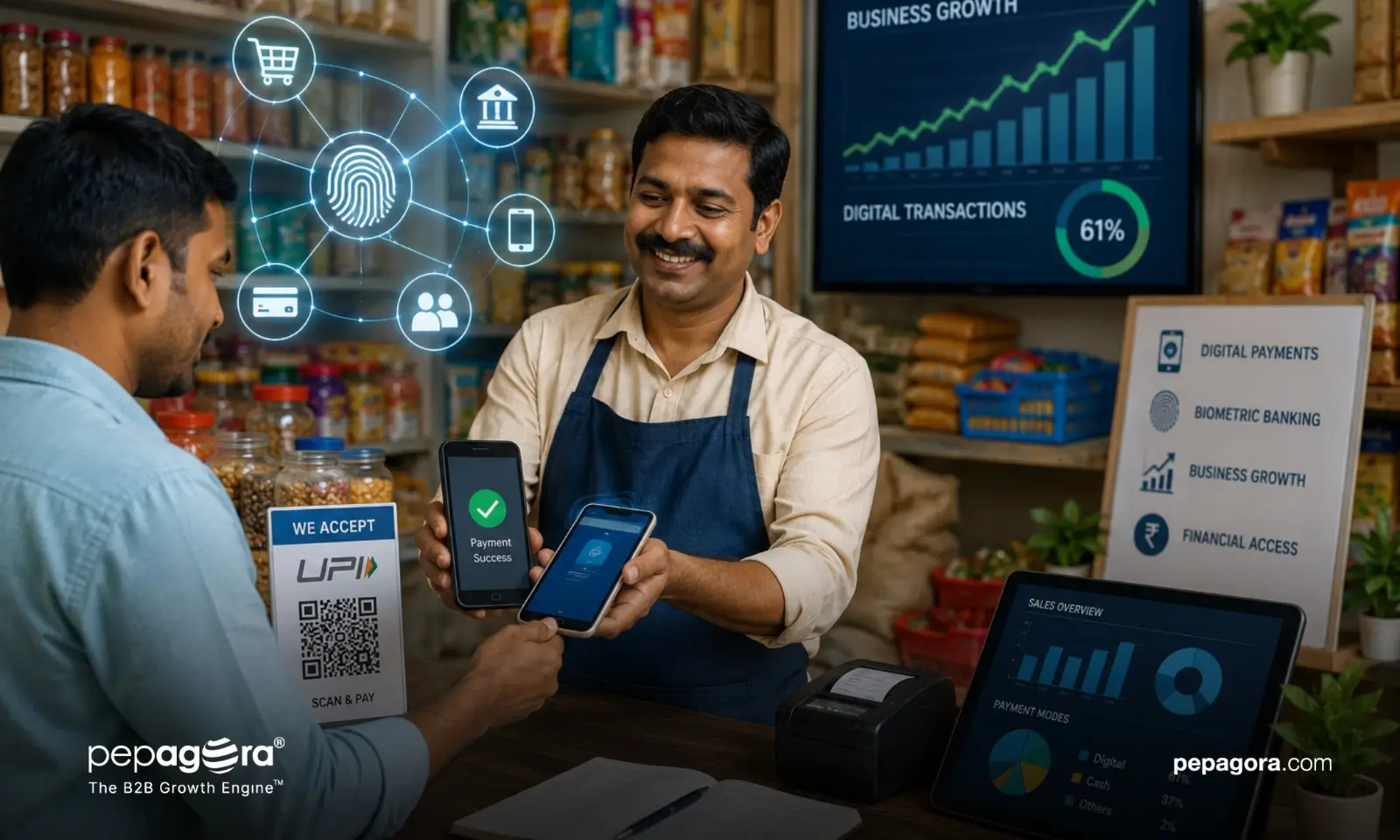


In the modern economic ecosystem, Micro, Small, and Medium Enterprises (MSMEs) form the structural backbone of industrial production, employment, and grassroots entrepreneurship. Despite their undeniable economic weight, these enterprises have historically faced a systemic hurdle: access to timely, affordable credit.
Traditional lending methodologies rely heavily on physical collateral, extensive paperwork, and manual verification processes—criteria that automatically disadvantage smaller or newer operations. To break this historical bottleneck, central banking regulators and financial authorities have issued a sweeping call to commercial banks and non-banking financial companies (NBFCs).
The mandate is clear: maximize the deployment of the nation’s shared Digital Public Infrastructure (DPI) to dramatically scale up credit access for MSMEs. Delivered during a specialized financial forum organized ahead of International MSME Day, this policy push signals a permanent transition from rigid, collateral-backed lending models to a dynamic, data-driven financial ecosystem accessible through modern digital trade channels.
Unlocking Credit Through Shared Digital Networks
At its core, Digital Public Infrastructure (DPI) refers to a collective, open-access network of software systems designed to support mass identity verification, instant payment processing, and secure data exchanges. When applied directly to commercial business lending, DPI functions as a transformative diagnostic engine.
Rather than looking backward at stale balance sheets or requiring physical property deeds, the modern digital lending infrastructure relies on three interconnected, high-tech components:
1. Consent-Based Data Architecture
The bedrock of this new digital paradigm is a secure, consent-based data-sharing framework. Historically, compiling financial histories from multiple banks, tax registries, and utility providers was a logistical nightmare for small business owners. Under the new architecture, secure data networks allow businesses to instantly transmit fully verified financial histories to prospective lenders with a single digital sign-off, completely preserving data privacy.
Data Impact: One major data platform alone successfully helped secure over three and a half trillion units of currency in business loans during the last fiscal year, proving that friction-free data pipelines translate directly into rapid capital deployment.
2. Standardized Lending Interfaces & Invoice Discounting
To prevent fragmented software experiences, financial authorities are championing standardized, unified lending interfaces. These open-source software structures allow commercial banks and alternative lenders to plug directly into a central hub, offering uniform credit packages through integrated B2B platform dashboards.
Running parallel to these interfaces are electronic invoice discounting networks. These platforms allow smaller operations to monetize their outstanding receipts instantly. Instead of waiting 60 to 90 days for corporate clients to settle invoices, MSMEs can upload their digital invoices to an open exchange, where institutional lenders bid to provide immediate cash flow.
3. Real-Time Tax Records and Automated Compliance
Evaluating a micro-enterprise’s risk profile becomes significantly simpler when using real-time data trails. By integrating automated software directly with electronic tax portals and digital invoice registries, lending institutions can instantly verify a merchant’s actual business activity and revenue health. Furthermore, secure, automated identity check systems execute regulatory compliance, risk profiling, and anti-fraud checks seamlessly—eliminating expensive in-person branch visits.
The Lending Landscape and Targeted Support Systems
The push to fully integrate digital public infrastructure comes at a critical juncture for the global small business sector. According to recently consolidated data from late last year, total outstanding commercial bank credit assigned to the small business ecosystem reached a monumental 36.79 trillion currency units.
To bridge the remaining credit gap, financial regulators are pressing commercial lenders to accelerate target-driven, technology-backed frameworks designed to reach traditionally underserved micro-merchants and localized manufacturing hubs through distinct avenues:
Support Program Type | Intended Target Group | Primary Strategic Focus |
Priority Financing Allocations | Core MSME Sector | Enforces strict lending quotas to protect smaller businesses from being crowded out by large corporate borrowers. |
Micro-Unit Development Loans | Seed-Stage & Family Enterprises | Specialized, low-interest micro-funding programs built for early capitalization needs. |
Specialized Urban Vendor Schemes | Mobile Street Retailers | Low-barrier digital loan applications providing rapid working capital without brick-and-mortar storefront constraints. |
Artisan & Heritage Funding | Traditional Craftsmen & Weavers | Dedicated credit lines crafted to help regional creators purchase raw materials and access broader export markets. |
State-Backed Credit Guarantees | Eligible High-Risk Small Businesses | State-sponsored guarantee funds acting as safety nets by covering a significant portion of defaults on collateral-free loans. |
A Modern Approach to Business Registration
The doorway to this entire digital ecosystem is anchored by a unified, standardized national registration platform. This foundational system functions essentially as a digital business passport. By entering basic organizational details, small business owners formally register their operations on a centralized registry, instantly obtaining a single, verifiable digital identity.
This foundational digital passport automatically unlocks a business’s eligibility for linked support programs, regional tax benefits, state subsidies, and secure institutional lending options. Because the registration database is fully integrated with the broader digital public infrastructure, a merchant’s active status is immediately visible to prospective lenders, eliminating the need to repeatedly prove legal business existence when applying for credit.
As these tools scale up, integrating smarter data networks with specialized AI solutions for small retailers and factories will make it even easier to automate transaction verification and build instant creditworthiness.
Ultimately, by weaving together these interconnected tech frameworks, policymakers are orchestrating a profound structural transition. The traditional lending landscape—once plagued by physical bottlenecks, heavy documentation, and high entry barriers—is rapidly evolving into a fast, paperless, and deeply democratized ecosystem.