
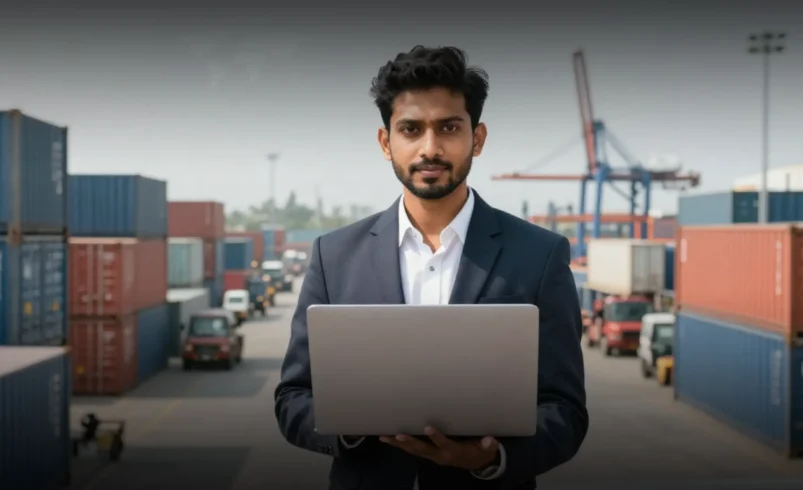

For years, exporting was often viewed as a game reserved for large companies with international offices, distribution networks, and dedicated export teams. But in 2026, that assumption is beginning to change.
Across India, small and medium enterprises are increasingly finding that digital channels, trade platforms, cross-border commerce tools, and policy support are lowering entry barriers to international markets.
For Indian SMEs, the conversation is no longer whether exporting is possible. The real question is whether they are prepared to compete.
India’s export ecosystem is becoming more accessible through digital documentation, easier business discovery, and stronger support for manufacturing and services. Buyers across the Middle East, Southeast Asia, Europe, and Africa are actively looking beyond traditional sourcing destinations and exploring Indian suppliers for reliability, competitive pricing, and production flexibility.
This shift creates a meaningful opportunity for SMEs.
According to the World Bank, SMEs represent around 90 percent of all businesses and account for more than half of global employment. One of the biggest changes has been the growing importance of digital visibility.
International buyers increasingly conduct supplier discovery online before initiating conversations, and companies that maintain updated business profiles, product catalogs, certifications, and response systems are seeing stronger inquiry quality.
For SMEs, visibility itself is becoming a competitive advantage.
Another major factor is buyer behavior. Global procurement teams are reducing dependence on a small number of suppliers and expanding sourcing networks to improve resilience. Smaller Indian businesses that demonstrate consistency, compliance, and communication discipline are entering consideration lists that previously favored larger enterprises.
However, exporting remains more than simply receiving international inquiries.
SMEs must prepare operationally.
Export readiness now includes:
• Product standardization
• Documentation capability
• Faster response systems
• International payment readiness
• Consistent fulfillment capacity
• Basic compliance awareness
• Professional business communication
Many businesses lose opportunities not because of pricing, but because they respond slowly, provide incomplete information, or appear operationally unprepared.
Technology is also changing export economics.
Affordable digital tools now allow SMEs to:
• Showcase products globally
• Manage buyer communication
• Generate inquiries
• Track prospects
• Build professional business presence
• Improve conversion efficiency
Businesses that previously relied only on referrals are gradually building structured lead pipelines through digital ecosystems and a strong presence on a global b2b trade platform.
Another area gaining attention is category specialization.
SMEs that clearly define their niche tend to perform better internationally than businesses trying to serve everyone. Whether industrial products, agriculture, raw materials, packaging, engineering, chemicals, machinery, food processing, or specialized manufacturing, focused positioning often improves buyer confidence.
Government support mechanisms and export promotion initiatives continue expanding, but execution remains the deciding factor.
The businesses likely to benefit most in 2026 are not necessarily the biggest.
They are often the fastest to adapt.
Experts suggest SMEs begin with smaller international orders, strengthen documentation processes, improve digital visibility, and build repeatable operating systems instead of chasing immediate scale. Many of these approaches align with proven export champion strategies for Indian SMEs.
The next phase of Indian exports may not be led only by large corporations.
It may increasingly be driven by thousands of small businesses becoming globally visible.
What Indian SMEs Should Do Now
• Build an export-ready digital presence
• Improve inquiry response time
• Organize certifications and documents
• Develop international pricing structures
• Track buyer engagement consistently
• Create category-specific positioning
• Focus on repeat business capability
Businesses that prepare early may find that global expansion no longer requires global-sized budgets.