
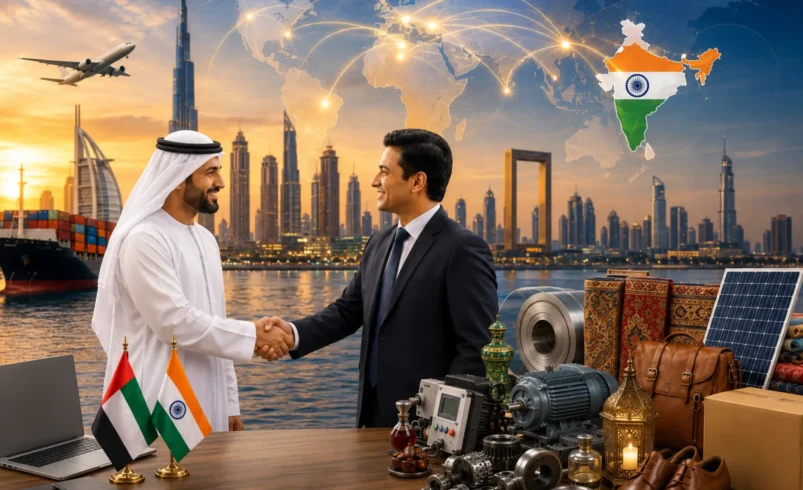

A significant shift is taking shape in global trade, and Indian manufacturers may be among the biggest beneficiaries. Across the Gulf Cooperation Council (GCC) region and the broader Middle East, import demand is rising steadily as countries invest heavily in infrastructure, manufacturing, logistics, healthcare, food security, renewable energy, and industrial diversification.
For Indian businesses, particularly Micro, Small, and Medium Enterprises (MSMEs), this growing demand presents a valuable opportunity to expand cross-border exports, build long-term buyer relationships, and establish a stronger presence in one of India’s most important trading regions.
Trade experts believe that the Middle East could become one of the fastest-growing export destinations for Indian manufacturers over the next decade as regional economies continue their transformation beyond oil dependence.
The Middle East Is Undergoing a Major Economic Transformation
Countries across the Middle East are actively pursuing economic diversification strategies aimed at reducing dependence on hydrocarbons. Large-scale national development plans are driving investments in:
- Infrastructure projects & smart cities
- Manufacturing facilities & industrial zones
- Renewable energy & transportation networks
- Healthcare systems & food processing hubs
These investments are generating significant demand for imported products, machinery, raw materials, industrial equipment, construction materials, and consumer goods. For Indian manufacturers, this represents a rapidly expanding market with strong purchasing power and growing industrial requirements. However, capitalizing on this momentum requires understanding how geopolitical shifts impact regional shipping lanes and commodity supply chains.
Why the GCC Region Matters
The Gulf Cooperation Council, comprising Saudi Arabia, the United Arab Emirates, Qatar, Kuwait, Bahrain, and Oman, remains one of India’s most important trade partners. The region offers several distinct logistical and commercial advantages:
- Geographic proximity and strong shipping connectivity
- Established bilateral trade agreements
- A large expatriate Indian business network
- Shorter shipping transit times compared to Europe and North America
Construction and Infrastructure Fuel Import Growth
One of the largest drivers of import demand is infrastructure development. Across the Middle East, governments are investing billions of dollars in commercial developments, airports, and smart city initiatives.
These massive footprints require substantial volumes of construction materials, steel products, electrical equipment, industrial machinery, and paints. Indian manufacturers operating in these sectors are increasingly finding opportunities to participate in regional supply chains.
Demand for Industrial Products Continues to Rise
The Middle East is no longer simply a consumer market; it is actively expanding its local production capabilities. Industrial buyers across the region are heavily sourcing engineering goods, industrial chemicals, packaging materials, and automation tools.
Indian suppliers are often viewed favorably due to their ability to deliver competitive pricing, reliable quality, and flexible manufacturing capabilities. Many procurement teams are actively seeking alternative sourcing partners as part of broader supply chain diversification efforts.
Food Security Initiatives Create New Opportunities
Food security has become a strategic priority for many Middle Eastern countries. The region imports a significant portion of its food requirements and continues investing heavily in supply chain resilience.
This trend is creating lucrative channels for Indian enterprises involved in agricultural products, spices, grains, and value-added processed foods. As demand grows, Indian manufacturers and exporters who align with strict regional quality certifications are well-positioned to meet these sourcing needs.
Healthcare and Pharmaceutical Demand Expands
Healthcare investment across the GCC region is increasing rapidly. Governments are expanding healthcare infrastructure while private-sector investment continues to grow. This is driving demand for pharmaceutical products, medical devices, laboratory supplies, and specialized packaging materials.
Supply Chain Diversification Benefits India
International sourcing patterns are changing. International buyers increasingly want to reduce dependency on a limited number of sourcing destinations. This shift is encouraging procurement teams to identify reliable suppliers across multiple countries.
India’s manufacturing capabilities, skilled workforce, and improving infrastructure have made it an attractive alternative. Trade consultants note that many Middle Eastern buyers are now expanding their supplier networks and actively helping Indian small businesses take their first steps into international trade.
Digital Procurement Is Changing Buyer Behavior
The way buyers discover suppliers is evolving rapidly. Procurement teams increasingly rely on digital channels to search for suppliers, compare product offerings, evaluate certifications, and submit inquiries.
For Indian manufacturers, digital visibility is becoming as important as production capability. Businesses with professional digital profiles, detailed product catalogs, and responsive communication processes are far better positioned to attract international buyers. Many exporters are leveraging global B2B marketplace infrastructure like Pepagora to increase visibility among verified buyers and strengthen their digital presence in international markets.
MSMEs Have a Significant Opportunity
While large corporations continue to dominate export volumes, MSMEs are increasingly participating in international trade. Smaller manufacturers often possess structural advantages such as production flexibility, faster customization, competitive pricing, and highly specialized product expertise.
These strengths align perfectly with the requirements of Middle Eastern buyers seeking reliable, agile sourcing partners. As export infrastructure improves and digital trade becomes more accessible, MSMEs are finding it easier to connect directly with overseas customers.
Challenges Exporters Must Address
Despite the clear opportunities, businesses must prepare thoroughly before entering Middle Eastern markets. Important considerations include:
- Compliance: Meeting country-specific regulations and technical standards.
- Certifications: Acquiring necessary quality and environmental benchmarks.
- Logistics: Navigating freight routing, packaging requirements, and payment security frameworks.
Looking Ahead
The Middle East’s economic transformation is creating one of the most promising export windows for Indian manufacturers in recent years. Rising import demand, large-scale infrastructure investments, industrial diversification, and changing sourcing strategies are combining to create highly favorable conditions for exporters.
For Indian MSMEs and manufacturers willing to invest in export readiness, quality standards, and international visibility, the region offers significant growth potential. As global trade patterns continue evolving, the Middle East is likely to remain a key destination for Indian products, helping businesses move beyond domestic markets and establish a stronger presence on the global stage.
