

Digital Procurement Gains Momentum Among Indian MSMEs
Digital procurement is gaining traction among India’s micro, small and medium enterprises (MSMEs), changing how businesses discover suppliers, compare offers and evaluate purchasing decisions. As more transactions move online, supplier quality, delivery performance, pricing transparency and documented business credentials are becoming increasingly important in digital sourcing.
According to the Digital Bharat: India Digital Procurement Report 2026, released by the India SME Forum in August, India’s MSME procurement economy is estimated at ₹124.9 trillion. The report found that 80.4% of surveyed enterprises expected digital procurement to play a major role in expanding their businesses over the following three years. However, only 30–40% of procurement spending was taking place through digital channels.
The findings point to substantial scope for digital platforms to influence how Indian businesses select suppliers and manage commercial relationships.
Supplier Evaluation Moves Beyond Price
Traditional B2B sourcing has often relied on personal networks, referrals, negotiations and direct vendor relationships. While these methods remain important, digital procurement platforms allow buyers to compare multiple suppliers without depending exclusively on existing contacts.
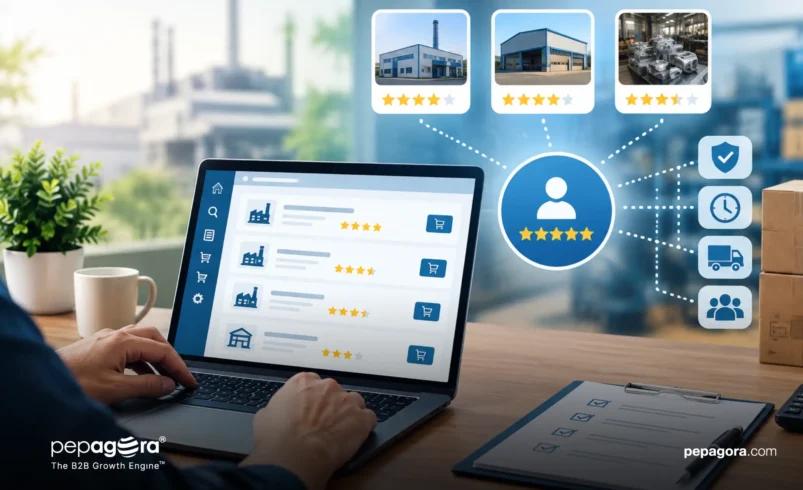
Supplier ratings, reviews and performance indicators can provide additional information during this process. Depending on the platform, buyers may be able to assess product quality, delivery reliability, responsiveness, pricing and previous transaction experiences before placing an order.
For MSMEs competing for business, this creates a shift in how supplier credibility can be established. A smaller enterprise may have an opportunity to reach buyers outside its immediate geography, provided it can demonstrate relevant capabilities and meet the buyer’s requirements.
However, ratings alone do not guarantee orders. Buyers may also examine technical specifications, certifications, production capacity, pricing, payment terms and compliance documentation.
India SME Forum Report Highlights Digital Sourcing Trends
The 2026 India SME Forum report identified wider product selection, price comparison, convenience and easier ordering among the reasons businesses use digital procurement marketplaces.
It also found that 61.5% of surveyed MSMEs planned to increase their use of digital procurement platforms, while nearly half expected to adopt AI-enabled procurement tools over the following two years. Raw materials and machinery were among the categories identified as likely to see greater online procurement.
These developments could make supplier information increasingly valuable. As buyers compare more vendors digitally, businesses that maintain accurate product listings, respond promptly to enquiries and provide reliable transaction records may be better positioned to earn buyer confidence.
For smaller suppliers, digital visibility could complement traditional sales networks and provide access to a broader pool of potential customers.
GeM Expands Digital Procurement Opportunities
India’s Government e-Marketplace (GeM) offers another example of technology reshaping procurement access for smaller businesses.
According to the Ministry of Commerce and Industry, procurement sourced from micro and small enterprises through GeM exceeded ₹8.69 lakh crore, with registered MSEs reaching more than 11.9 lakh as of June 2026. The platform supports online seller onboarding, bidding, digital contract management and procurement processes.
In August 2026, the government reported that GeM’s cumulative gross merchandise value had crossed ₹20 lakh crore. The platform also uses artificial intelligence and machine learning to identify suspected procurement irregularities, including possible collusion and order splitting.
Although GeM is a public procurement platform rather than a general B2B supplier-rating marketplace, its digital transaction records and monitoring systems illustrate the growing role of data and transparency in supplier selection.
What Digital Ratings Could Mean for Smaller Suppliers
For MSMEs, supplier ratings can create both opportunities and risks. Positive feedback and dependable performance records may help businesses build credibility with prospective buyers. Conversely, repeated late deliveries, inconsistent product quality or unresolved complaints could weaken their prospects.
This makes operational discipline increasingly relevant to digital sales. MSMEs can strengthen their position by maintaining accurate product information, meeting agreed delivery timelines, communicating delays early, responding to customer complaints and keeping invoices and compliance records organised.
Businesses should also monitor how ratings are calculated on individual platforms. Review systems may differ, and a rating may not fully reflect a supplier’s technical capabilities or suitability for a particular contract. A verified business attracts more buyers.
Data-Driven Procurement Creates a New Competitive Factor
The expansion of digital procurement suggests that winning B2B orders will increasingly involve more than offering the lowest price. Buyer confidence, documented performance and the ability to deliver consistently can influence supplier selection alongside cost and technical requirements.
For India’s MSMEs, the emerging opportunity is to combine digital visibility with dependable execution. As procurement platforms introduce more analytics and automation, businesses that maintain credible records and consistently meet buyer expectations may be better equipped to compete for new orders. Verified B2B buyers in India.
The wider shift is already visible in India’s growing digital procurement ecosystem. How effectively individual MSMEs use supplier-performance information—and how platforms ensure ratings are fair and reliable—will help determine its impact on B2B trade. AI-powered platforms for faster business matching.
FAQs
Supplier ratings help buyers assess a business's reliability, product quality, delivery performance and customer service before placing orders.
Buyers may evaluate product specifications, certifications, production capacity, pricing, delivery timelines, payment terms and compliance records.
MSMEs can maintain accurate product listings, respond promptly to enquiries, meet delivery commitments, resolve complaints and keep business documentation up to date.

About Author
Harsha Varthan
Harsha is a highly respected B2B marketing expert who passionately helps sellers and buyers connect, grow their businesses online, and build strong global visibility. His expertise spans SEO, content marketing, lead generation, marketplace strategy, public relations, and result-driven digital growth planning, making him a trusted voice in the industry.