
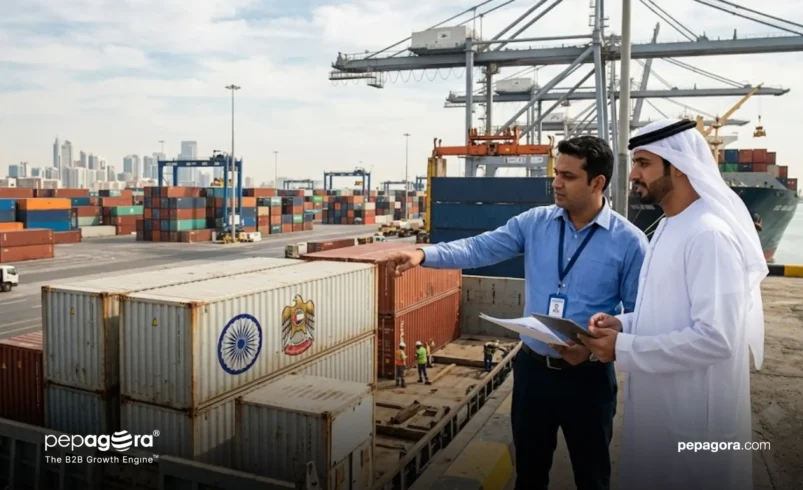

For companies operating in India that seek growth outside the Indian market, engaging in international markets may offer good growth opportunities; however, this might be associated with tariffs, requirements, unfamiliarity with markets, and tough competition. In order to minimize some of the above challenges, trade agreements can be utilized.
A Comprehensive Economic Partnership Agreement (CEPA) refers to a tool that aims at enhancing economic relations between the involved parties through better market access and creation of a rule book for goods and services trade. India has signed CEPA agreements with a number of countries such as UAE, Japan, and South Korea, providing various ways to how Indian SMEs can become export champions in the international market.
Knowledge about CEPA Benefits offered within a specific agreement may prove useful for Indian exporters in identifying good export opportunities.
What Is a CEPA?
CEPA is a wide-ranging trade agreement between two or more nations with the purpose of fostering economic cooperation and trade. Depending upon the terms and nature of the agreement, a CEPA may include matters such as trade in goods, services, tariff reduction, rules of origin, custom procedures, investment, and other economic cooperation.
As compared to the tariff reduction alone, CEPA may include many facets of business. This makes CEPA relevant not only for manufacturing businesses and exporters but also those who provide professional services through digital means.
For Indian businesses, the practical utility of each CEPA depends upon the details of the particular CEPA, nature of product or service being exported, destination market, and other factors related to eligibility for CEPA.
Key CEPA Benefits for Indian Businesses
Lower or Preferential Tariffs
Another significant advantage of trade agreements is better tariff treatment. Reduced or exempted customs duties can make Indian goods more competitive in the destination market.
India-UAE CEPA offers a perfect case study here. As part of the agreement, the UAE offered immediate duty-free access to products worth around 90% of India’s export value to the UAE, while preferential access was provided to over 97% of tariff lines worth about 99% of the export value.
Lower tariffs can potentially allow improving the competitiveness of prices, increase margins or provide the opportunity for increased investment into market development. Indian businesses can explore how to leverage FTAs for export growth to maximize these tariff advantages across different destination markets.
Improved Market Access
CEPA agreements can enable or enhance market access through the reduction of trade barriers and creation of clear commercial conditions.
This could be especially beneficial for Indian companies operating in industries such as textiles, pharmaceuticals, engineering products, agriculture, automobiles, leather, footwear and others. For example, under the India-UAE CEPA, several labour-intensive industries have been given preferential market access, namely, gems and jewellery, textiles, leather, footwear, sports goods, plastics, furniture, agricultural products, engineering products, pharmaceuticals, medical devices and automobiles.
It will allow businesses to expand their reach beyond domestic market and explore new customer segments.
Increased Export Potential for MSMEs
Smaller companies encounter more difficulties entering international markets due to lack of resources, market knowledge and distribution networks.
Through the preferential market access provided within trade agreements, companies could make certain markets more attractive through the improvement of commercial conditions for relevant products. As per the Indian government, many of labour-intensive industries which benefit from India-UAE CEPA consist of MSMEs.
In turn, this will give MSMEs the chance to build up the international customer base without being fully dependent on domestic demand.
CEPA Benefits Beyond Tariff Reduction
Services Opportunities
It is not just physical goods where modern international trade has opportunities. IT services, consultancy services, financial services, professional services, education, healthcare, and many other service-related industries can also take advantage of deals that offer greater market access.
For instance, the India-UAE CEPA had commitments with regards to services with the UAE providing market access to India within approximately 111 sub-sectors in 11 major sectors of the services industry. This will generate more chances for Indian service providers to develop connections with their clients abroad.
Greater Transparency and Predictability
For any foreign company, knowing how much tariffs are there, how customs regulations look like, who is eligible, and what other factors might be relevant to the transaction is essential. These factors can be regulated by a trade agreement.
Predictability will give business people an opportunity to plan the pricing, manufacturing, sourcing, and entry into the market.
Support for International Development
It should be noted that a CEPA cannot be seen merely as a means to cut down import tariffs. If a company plans to operate internationally in the long term, then improved market access can be one of its strategic tools.
Sectors That Can Explore CEPA Opportunities
The actual opportunities will depend on the particular agreement(s), but there may be some avenues worth exploring for Indian businesses operating in various sectors.
Textiles & Apparels
Indian textile and apparels sector could consider possibilities of demand for garments, textiles, home furnishings, and related products abroad. Preferential tariffs may have an impact on improving competitiveness in the destination market. Additionally, trends like accelerating US orders in India’s apparel sector highlight how steady global demand aligns with trade agreement benefits.
Pharmaceutical & Healthcare
Indian pharmaceutical and healthcare companies may consider the possibility of export to international destinations with increasing demand for medicines, medical devices, and healthcare-related products. The exporters will however need to adhere to regulatory requirements.
Engineering & Manufacturing
Engineering products, machinery, automotive parts, electrical goods, and industrial equipment can be the areas worth exploring in terms of export from India.
Agriculture & Food Products
Agricultural as well as processed food products businesses may consider exploring possibilities of overseas demand for spices, rice, processed foods, and other food products.
How Businesses Can Make the Most of CEPA
Just being aware of such preferential trade terms is not enough to ensure the success of exports. Business should know how to apply the agreement properly.
Identify Applicable Goods or Services
First, one should identify the goods or services eligible for preferential treatment according to the selected agreement. Companies should study the particular tariff lines rather than thinking that all products are applicable.
Learn Rules of Origin
The rules of origin are crucial as preferential treatment usually concerns only those goods which meet the rules of origin stated in the agreement.
For instance, there are particular criteria of origin of goods in the India-UAE CEPA, including value-content requirements for some of the products.
Confirm Compliance with Documentation Requirements
Businesses should know what documents must be provided to benefit from the agreement, i.e., what particular certificates of origin and customs declarations are applicable. An electronic platform of the India certificate of origin is developed to simplify the procedure of obtaining such documents.
Research the New Market
It is obvious that the reduced tariff does not mean the high level of demand. The company should analyze the customer preferences, competitors, pricing policy, rules and regulations, distribution channels, and purchasing habits before entering the market.
Establish Relationships with Buyers Abroad
Export development is impossible without reliable customers and partners. Business can find international buyers through B2B platforms, exhibitions, export promotion councils, distributors, etc. Understanding what export-ready SMEs and global buyers expect helps build long-term trust and sustained international partnerships.
Common Mistakes Businesses Should Avoid
Assuming All Products Will Receive the Same Treatment
Benefits under CEPA change from one product to another, from one tariff line to another, and from one agreement to another. Exporters need to find out which specific terms apply to their products.
Failing to Address Nontariff Factors
Lower tariffs do not mean that factors concerning product standards, labeling, certification, custom duties, packaging, etc., do not apply.
Focusing on Prices Alone
Buyers on the international market look for quality, reliability, delivery schedules, certifications, services, reputation in addition to price. Companies need to develop a total offer.
Launching into Too Many Markets at Once
Companies new to exporting can benefit from concentrating their attention on one or two markets at a time.
The Future of CEPA and International Trade
Trade agreements are gaining importance because of the need for diversified markets and robust global supply chains. India’s trade agreement scenario is also evolving where agreements exist for goods, services, and even other areas of economic cooperation. There are dedicated systems from the government side to help track data and trade agreements, and this allows business firms to study the international market.
In such a case, Indian business organizations have a chance to plan their exports in a strategic manner. They should not look at a CEPA just as a tariff reduction tool but as part of an overall internationalization strategy.
The advantages of the CEPA for Indian companies do not end at reduced tariffs only. Market access, competitive advantage, opportunities in services sector and international trade framework are some of the other benefits that an Indian business can receive based on the agreement and the products or services that are covered by the agreement.
Such agreements will provide exporters and MSMEs export opportunities, but for the successful utilization of this opportunity it is essential to be aware of the provisions of such agreement, fulfill the requirements of rules of origin, documentation and conduct proper destination market research. The agreements will give market access opportunities, but to successfully leverage them, an exporter requires a good product, sound business practices, competitive prices and international buyers.