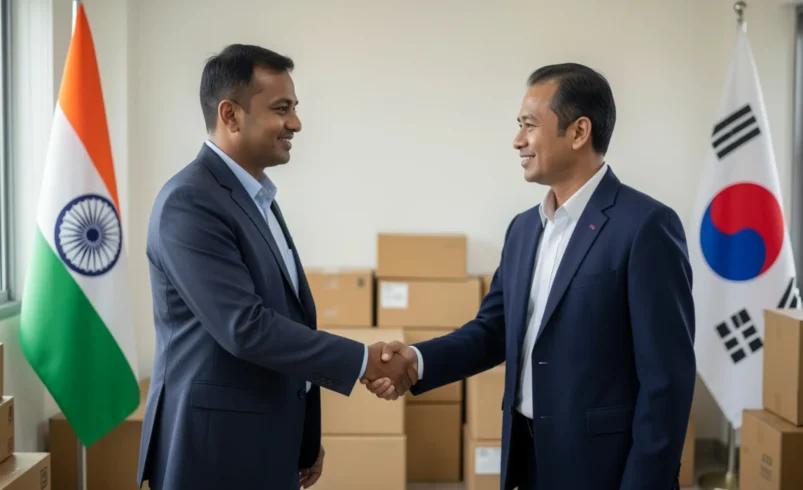

New Delhi/Seoul, 2026: India and South Korea are strengthening economic ties with a renewed focus on MSME collaboration, opening a fresh chapter for small businesses looking to expand globally. The latest MSME-focused pact between the two countries aims to boost bilateral trade, technology exchange, and supply chain partnerships. For Indian SMEs, this agreement is not just diplomatic progress, it is a direct gateway to new export markets.
Why This Pact Matters for Indian SMEs
According to PIB, India’s MSME sector contributes 45.73% of total exports while employing over 110 million people. However, a large portion of SMEs still operate within domestic markets due to limited global access and lack of structured partnerships.
South Korea, on the other hand, is a highly industrialized economy with strong demand for quality manufacturing inputs, components, and specialized products. The collaboration between the two nations is designed to bridge this gap.
This pact is expected to:
• Increase SME participation in bilateral trade
• Improve access to advanced technology
• Strengthen supply chain integration
• Encourage joint ventures and partnerships
Key Highlights of the India–South Korea MSME Pact
The agreement focuses on practical support rather than broad policy announcements.
Major areas of collaboration include:
• Technology transfer and innovation support
• Joint business forums and trade facilitation
• Skill development and training programs
• Market access support for SMEs
• Easier regulatory and compliance processes
These measures aim to make it easier for small businesses to enter and operate in international markets.
Export Opportunities Across Key Sectors
The pact opens opportunities across multiple industries where Indian SMEs already have strong capabilities.
Manufacturing and Engineering
Indian SMEs in auto components, machinery, and industrial parts can tap into South Korea’s advanced manufacturing ecosystem. There is strong demand for cost-efficient and reliable suppliers.
Electronics and Electricals
With South Korea being a global leader in electronics, Indian SMEs can become part of supply chains by supplying components, raw materials, and support services.
Textiles and Apparel
India’s textile sector can benefit from increased demand for fabrics, garments, and fashion accessories in Korean markets.
Food Processing and Agriculture
Processed food, spices, and agri-products from India have growing demand in South Korea, especially with rising interest in diverse cuisines.
Chemicals and Specialty Products
SMEs dealing in chemicals, intermediates, and specialty materials can explore niche export opportunities.
Industry Data Supporting the Opportunity
The India–South Korea trade relationship is already strong and growing.
Key statistics:
• Bilateral trade crossed $27 billion in recent years
• Target to reach $50 billion in the coming years
• MSMEs contribute a significant share in manufacturing exports
• South Korea imports large volumes of intermediate goods
This indicates a strong demand-supply alignment that SMEs can leverage.
How SMEs Can Benefit Directly
The pact is structured to provide tangible benefits to small businesses.
Key advantages include:
• Easier Market Entry – Simplified procedures and institutional support make it easier for SMEs to explore exports without heavy compliance burdens.
• Access to Technology – Collaboration with Korean firms can help Indian SMEs upgrade production capabilities and improve quality standards.
• Increased Credibility – Association with international partners enhances brand value and trust in global markets.
• Diversification of Revenue – Entering new markets reduces dependency on domestic demand and improves business stability.
Challenges SMEs Must Prepare For
While opportunities are strong, SMEs must also be prepared for challenges.
Key concerns include:
• Meeting international quality standards
• Understanding foreign market regulations
• Managing logistics and supply chain complexities
• Handling currency fluctuations
• Building long-term relationships with buyers
Preparation and strategic planning will be critical.
What SMEs Should Do Now
To take advantage of this pact, SMEs need to act proactively.
Action steps include:
• Upgrade Product Quality – Ensure products meet international standards and certifications required in South Korea.
• Focus on Compliance – Understand export regulations, documentation, and trade requirements.
• Build Digital Presence – Having an online presence through a global b2b marketplace increases visibility among global buyers and strengthens market reach.
• Participate in Trade Events – Engage in business forums, exhibitions, and networking platforms linked to the pact.
• Strengthen Supply Chain – Ensure the ability to deliver consistent quality and timely shipments.
Role of Government and Industry Bodies
Government agencies and trade bodies are expected to play a crucial role in supporting SMEs.
Support initiatives may include:
• Export training programs
• Financial assistance for market entry
• Trade facilitation services
• Business matchmaking platforms
These efforts aim to reduce entry barriers and encourage SME participation.
Expert Outlook
Industry experts believe that this pact could significantly boost SME exports if implemented effectively.
Expected outcomes include:
• Increased SME contribution to exports
• Stronger integration into global supply chains
• Technology-driven growth in manufacturing
• Expansion of India’s presence in East Asian markets
However, experts emphasize that awareness and execution will determine success.
The Bigger Picture
India is actively expanding its global trade partnerships, and MSMEs are at the center of this strategy. The growth of small businesses, reflected in the rise of micro enterprises in India , shows their increasing role in driving economic growth and global trade participation.
Agreements like the India–South Korea pact are designed to position SMEs as global suppliers rather than just domestic players. This aligns with India’s long-term vision of becoming a manufacturing and export hub.
The India–South Korea MSME pact presents a significant opportunity for Indian small businesses to enter a high-value international market. It offers access to technology, partnerships, and new revenue streams.
For SMEs willing to invest in quality, compliance, and global outreach, this could be a turning point.
The opportunity is real, but it will favor those who act early, prepare strategically, and align their operations with global standards.