
Exporting used to be linked to large firms which had international links, distributors and other such assets for a long time now. Digital trade is altering the dynamics.
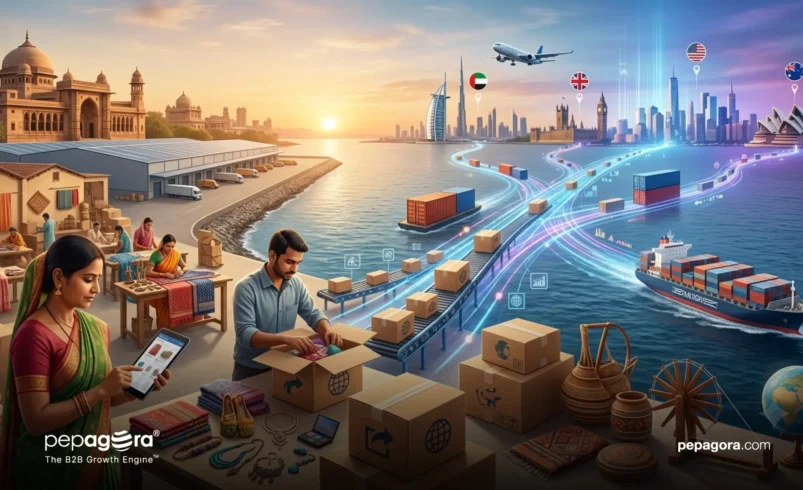
As cross-border e-commerce becomes more popular among Indian MSMEs, small firms can introduce their goods to the international market without fully depending on the conventional network for distribution.
From handicrafts, textiles to food items, cosmetic products, engineering goods and specialized services, there is much that Indian MSMEs have to export to the global market.
What Is Cross-Border E-Commerce?
The cross-border e-commerce involves the sale of goods and services to consumers or organizations located in other nations using the Internet.
As opposed to relying on physical locations alone, agents or foreign distributors, businesses have adopted the use of the Internet for conducting cross-border transactions using e-commerce sites, business portals, and even their own online store fronts.
This has made market globalization much easier for small firms.
Why Cross-Border E-Commerce Is Growing
One of the major benefits of e-commerce is the ease of access.
An MSME situated in India may showcase its goods to possible buyers in a different country without having to open an office in that other nation. The use of digital catalogues, payment methods online, logistic support, and shipment of goods internationally could facilitate many aspects of the selling process.
Buyers have become very comfortable buying goods online from firms based outside their nations.
This paves the way for Indian firms that have unique or competitive products.
Opportunities for Indian MSMEs
New Markets
The ability to conduct e-commerce on the international scale provides MSMEs with an opportunity to go beyond the local markets and explore foreign markets that could be interesting to serve. This allows finding out new markets that will be suitable for developing the customer base of the enterprise.
Increased Visibility of the Products of India
The country has a rich artisanal and manufacturing sector. A range of products from the sphere of textile industry, handicrafts, jewelry, house items, foodstuffs, and other unique goods can be interesting to the global customers.
The development of a digital marketing strategy will allow conveying all features and quality of the goods to the international community.
The Ability to Create a Brand
In addition to the increased volume of sales, the international sales can contribute to creating a strong brand of the enterprise.
The professional listing of the goods, its promotion and reliable delivery can contribute to building a strong brand of Indian MSMEs.
Data Collection
The analysis of customers’ behavior and market performance can provide businesses with valuable data that can be used in making strategic decisions.
What MSMEs Need to Succeed
Entering into the international markets through electronic commerce is an act that calls for proper preparation.
It calls for information about products offered, pricing, packaging, logistics, as well as the expectations of customers in the international market.
A business should also have knowledge about the exportation documents, customs, taxes, payment methods, returns and the regulations in the chosen market.
Above all, MSMEs should select markets wisely.
The Role of Digital Platforms
The use of digital B2B and e-commerce platforms may help facilitate international buyer identification as businesses can easily identify buyers beyond their local geographical market.
This would be useful for MSMEs to get an extra avenue for buyer identification, product exposure, inquiry, and export potential.
With the combination of a well-designed website and social media platforms, digital platforms may be an integral part of the MSME’s international strategy.
International commerce through the digital channel for Indian MSMEs has created new avenues for firms which found going international difficult or costly in the past.
The prospect becomes especially lucrative for MSMEs having differentiated products, good quality, competitive pricing, and reliability when it comes to serving their customers in the international market.
If Indian MSMEs pick their markets wisely, develop their online footprint, learn about export processes, and maintain consistent performance, they will be able to expand from domestic to international markets in search of customers.
The future of exports does not have to remain confined to only the bigger firms. Through digital commerce, small Indian firms have more avenues to succeed internationally.
ChatGPT can make mistakes. Check important info.
FAQs
Cross-border e-commerce for Indian MSMEs involves selling goods and services to consumers or organizations located in other countries through the Internet. It allows small firms to reach international buyers without depending entirely on traditional distribution networks.
Cross-border e-commerce can help Indian MSME exports by providing access to new markets, increasing product visibility, supporting international buyer identification, and creating opportunities to build stronger brands in global markets.
Indian MSMEs need to consider product pricing, packaging, logistics, export documentation, customs, taxes, payment methods, returns, and regulations in their chosen international markets. Selecting suitable markets and maintaining consistent performance are also important for sustainable growth.