
Small businesses may find it difficult to discover reliable buyers and move beyond local markets due to budget constraints, cutthroat competition, and challenges in reaching out to big institutions for business.
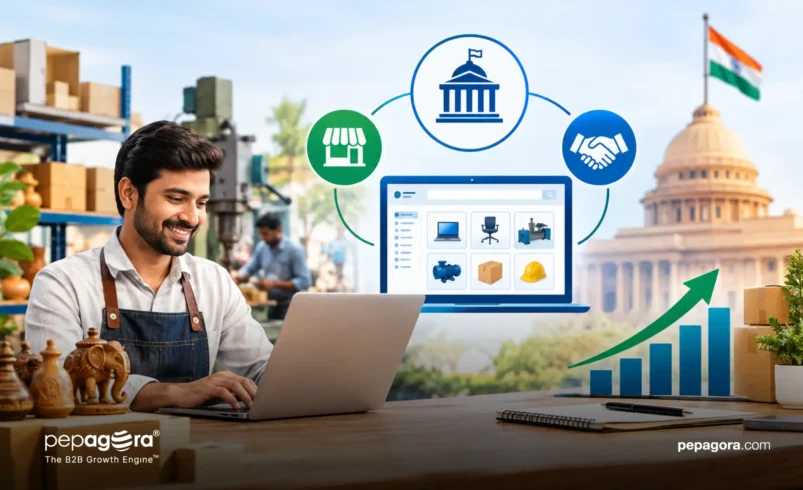
The Government e Marketplace (GeM), however, is making all of this possible through the availability of a digital marketplace that allows the purchase of products and services from registered sellers by government organizations.
MSMEs and other small businesses now have an option to access government buyers through a digital procurement system. Instead of relying solely on conventional sales methods, MSMEs can make use of GeM for their business. Government support for MSMEs is also becoming an important part of the broader business environment.
What Is GeM?
GeM is an online public procurement portal that aims to help government organizations in making purchases.
It acts as a virtual marketplace that makes procurement process more organized and transparent.
For sellers, GeM offers processes for the various phases such as registration, catalog management, bidding and reverse auction, order fulfillment, and others related to selling to the government buyers. At present, the GeM seller training materials cover these phases as part of the seller journey.
How GeM Creates Opportunities for Small Businesses
Access to Government Buyers
One of the largest advantages of the GeM platform for small enterprises is having access to an ecosystem of government buyers.
An enterprise need not rely only upon buyers who reside in their own city or region. The enterprise, when joining the platform, becomes able to showcase their offerings to government entities through a digital medium.
A Digital Route to Government Procurement
Procurement for traditional governments may seem very complex to businesses that are not familiar with the procedure.
GeM facilitates procurement procedures within the digital space. Vendors are able to sign up, manage their catalogues, engage in appropriate procurement activities, and deliver orders through the portal.
The presence of a structured digital process may simplify government procurement for businesses willing to satisfy the demands of the portal.
Opportunities Beyond Local Markets
The small manufacturer may typically operate on the basis of a certain city or a state since extending the sales network involves extra efforts.
GeM is an effective means for exploring demand for government buyers at various locations.
The broader coverage is especially important for MSMEs manufacturing standardized products, including office supplies, furniture, machinery, uniforms, industrial products, and others.
Support for MSME Participation
Procurement procedures and systems to motivate participation of Micro and Small Enterprises may also serve the needs of small firms.
Yet, companies must be aware of the rules and conditions required, rather than assume that registration alone will result in orders.
It is the challenge of being visible, competitive, in compliance, and able to meet government specifications.
What Small Businesses Need to Succeed on GeM
Registration alone on GeM will not suffice.
Companies require precise product information, competitive prices, dependable fulfillment capabilities, and proper documentation.
The GeM seller registration process requires business and contact information, billing information, banking information, and other information based on the seller category.
Companies should also maintain their product catalogs up to date and be familiar with the bidding and other procurement processes.
How GeM Can Support Business Growth
There are many other ways through which government orders can be beneficial to an enterprise besides providing cash inflows.
The successful delivery of orders can assist in developing operational experience, improving fulfillment capacity, and even earning credibility in the institutional markets.
A business entity can utilize experience gained in the process of making deliveries to the government in optimizing inventory management, production, documentation, and customer service. Integration of GeM with TReDS also highlights how digital government procurement can connect with broader financial processes for MSMEs.
This is important especially for MSMEs that are expanding their operations.
Common Mistakes Businesses Should Avoid
The small business must avoid regarding GeM merely as an e-commerce portal.
Submitting offers without having any knowledge about demand, pricing, product specifications, and purchase procedures is not likely to yield any meaningful outcome.
It is equally important for the business to avoid offering their products/services at reduced prices just to secure an order.
This is because government orders must be fulfilled properly, and margins must be kept sustainable.
Opportunities for small businesses through GeM are very closely linked to India’s overall movement toward a digitally enabled and transparent process of government procurement. Digital platforms and formal procurement systems are increasingly influencing how small businesses access larger institutional markets.
GeM will provide a digital platform to access government buyers and hence help MSMEs increase their market exposure, understand institutional demand, and pursue opportunities of procurement outside their regular customer base.
Yet, merely signing up on the website does not promise success. Accuracy of cataloguing, competitiveness of pricing, documentation, ability to deliver, and procurement procedures need to be understood.
Small businesses that are willing to put effort into all this will find the Government e Marketplace an excellent way to get new customers and grow.
FAQs
GeM is a digital public procurement marketplace that enables government organizations to purchase products and services from registered sellers. It gives small businesses an opportunity to showcase their offerings to government buyers beyond their local markets.
No. Registration alone does not guarantee orders. Businesses need to maintain accurate product catalogs, offer competitive pricing, follow procurement requirements, provide proper documentation, and demonstrate the ability to fulfill orders reliably.
MSMEs can offer a wide range of standardized products and services depending on applicable categories and procurement requirements. These can include office supplies, furniture, machinery, uniforms, industrial products, and various business services.