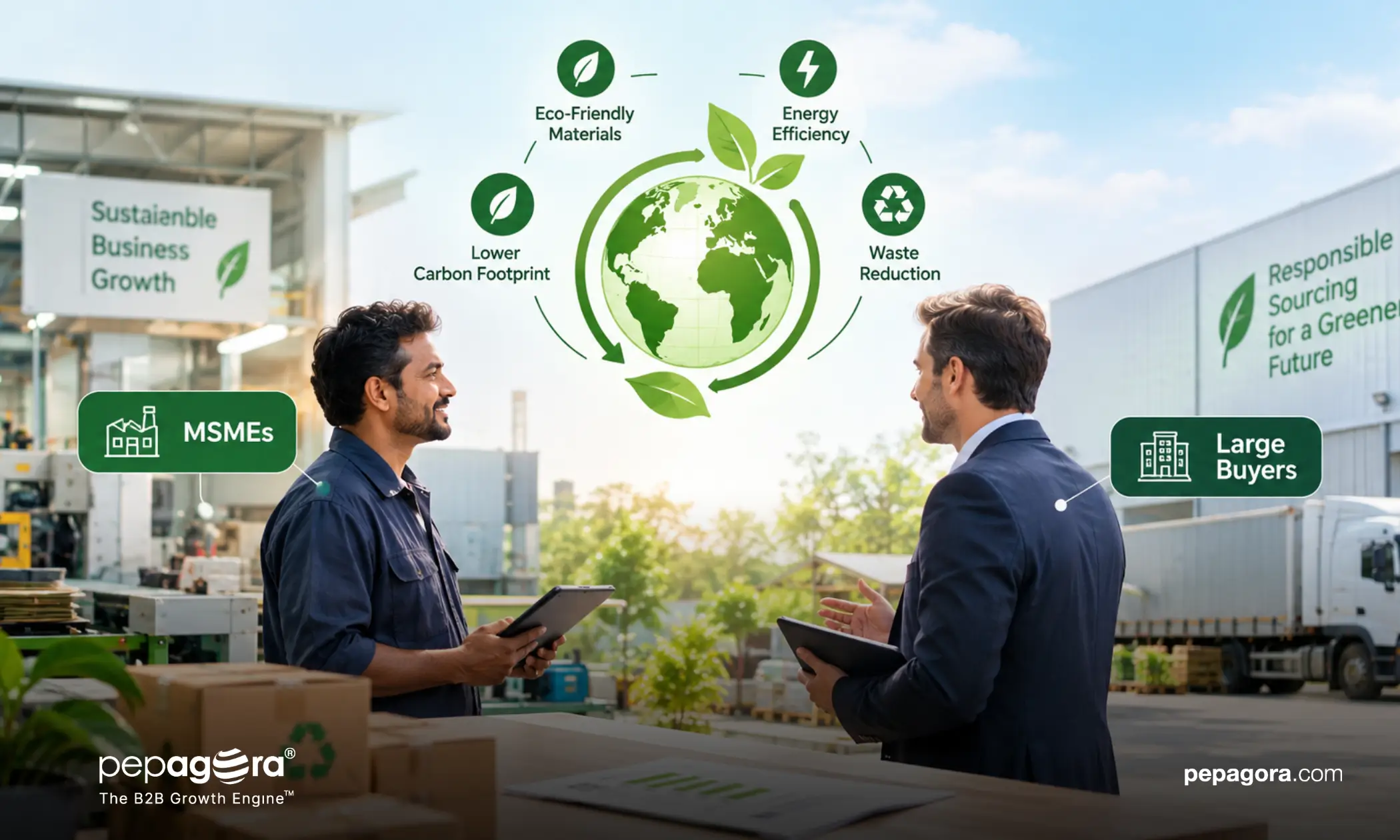

For small businesses, carbon emissions may once have seemed like an issue relevant mainly to large corporations. That is changing as sustainability expectations move deeper into global supply chains.
Large companies are increasingly collecting emissions information from suppliers, while international markets are introducing requirements that make carbon data more commercially relevant. India’s NITI Aayog, in its 2026 Roadmap for Green Transition of MSMEs, specifically recommends simplified emissions reporting for MSMEs, initially focusing on Scope 1 and Scope 2 emissions.
As a result, measuring emissions is gradually becoming more than an environmental exercise. For some businesses, it can become part of export readiness, supplier compliance and long-term competitiveness.
What Is Carbon Accounting?
Carbon accounting is the process of measuring and recording the greenhouse gas emissions associated with a business’s activities.
These emissions are generally divided into three categories:
- Scope 1: Direct emissions from sources owned or controlled by the business, such as fuel burned in boilers, furnaces or company vehicles.
- Scope 2: Indirect emissions associated with purchased electricity, heating, cooling or steam.
- Scope 3: Other indirect emissions across the value chain, including suppliers, transportation, employee travel and the use or disposal of products.
For many MSMEs, Scope 1 and Scope 2 are the most practical starting point because businesses usually have greater control over their own fuel and electricity data. NITI Aayog’s roadmap recommends this phased approach rather than immediately requiring complex Scope 3 reporting.
Why Is Carbon Data Becoming Important?
Large Buyers Need Supply-Chain Information
An MSME may not be directly subject to a large company’s sustainability reporting requirements, but it can still be part of that company’s value chain.
Large buyers may ask suppliers for information about energy consumption, emissions, materials and environmental performance. Without reliable data, smaller suppliers may find it harder to respond to these requests.
NITI Aayog notes that MSMEs can increasingly face requests to measure and reduce emissions because they form an important part of larger corporate supply chains.
Export Markets Are Increasingly Carbon-Aware
Environmental requirements can also influence international trade.
The EU’s Carbon Border Adjustment Mechanism (CBAM), for example, increases the importance of emissions information for covered imports. NITI Aayog identifies carbon-related trade measures as a potential challenge for export-oriented Indian MSMEs, particularly in sectors such as steel and other emissions-intensive industries.
For exporters, knowing their product and process emissions can therefore become commercially useful.
Measurement Helps Identify Cost Savings
Carbon accounting is not only about reporting.
The same data can reveal where a business is consuming excessive electricity or fuel. An MSME may discover that an inefficient machine, poorly maintained equipment or unnecessary production time is increasing both energy costs and emissions.
Measuring emissions can therefore become a tool for operational efficiency.
How Small Businesses Can Start
Step 1: Identify Major Emission Sources
Start with electricity, diesel, natural gas, coal, LPG and other fuels used in business operations.
Record monthly consumption rather than trying to calculate everything at once.
Step 2: Create a Baseline
Use the collected information to establish a baseline for annual Scope 1 and Scope 2 emissions.
The objective is to understand the current position before setting reduction targets.
Step 3: Maintain Consistent Records
Keep electricity bills, fuel purchases, production data and relevant operational records in one organised system.
Consistent data makes future calculations and buyer reporting easier.
Step 4: Identify Reduction Opportunities
Once the major sources are visible, businesses can prioritise practical measures such as energy-efficient machinery, preventive maintenance, process optimisation, renewable electricity or improved fuel efficiency.
Green transition can also make emissions measurement and energy efficiency increasingly relevant to MSME operations.
Step 5: Gradually Expand the Scope
After establishing reliable Scope 1 and Scope 2 data, businesses can assess important Scope 3 categories such as purchased materials, logistics and waste where customer or regulatory requirements make this relevant.
Carbon Accounting Can Become a Competitive Capability
For small businesses, the biggest advantage of starting early is preparedness.
NITI Aayog has recommended simplified digital tools that could help MSMEs calculate emissions using information such as fuel sources, equipment and energy consumption. The roadmap also highlights the need for easier reporting, capacity building and standardised measurement approaches.
This indicates a broader shift toward making emissions measurement more accessible to smaller enterprises.
Carbon accounting is becoming increasingly connected to how businesses manage costs, respond to buyers and participate in global supply chains.
For MSMEs, the process does not have to begin with complicated sustainability reports.
Starting with accurate Scope 1 and Scope 2 data can provide a practical foundation for understanding emissions, improving efficiency and preparing for future customer and market requirements.
The businesses that begin measuring today will have better information to manage their environmental impact—and a stronger foundation for competing in increasingly sustainability-conscious markets.
FAQs
Carbon accounting is the process of measuring and recording the greenhouse gas emissions associated with a business's activities. Small businesses can begin by tracking Scope 1 emissions from fuels and Scope 2 emissions associated with purchased electricity, heating, cooling or steam.
Carbon accounting is becoming important as large buyers increasingly seek supply-chain information and international markets introduce greater environmental requirements. It can also help MSMEs identify energy-use patterns and potential operational improvements.
A practical starting point is to record monthly electricity and fuel consumption, establish a Scope 1 and Scope 2 baseline, maintain consistent operational records and identify major sources of energy use. Businesses can then gradually assess relevant Scope 3 categories such as purchased materials, logistics and waste. Logistics can become an important Scope 3 area where transportation and supply-chain emissions are relevant.