
Limited Access to Formal Finance Remains a Major Challenge for Small Businesses
India’s Micro, Small and Medium Enterprises (MSMEs) are widely recognized as the backbone of the country’s economy. They contribute significantly to employment, manufacturing, exports, and innovation. However, despite their economic importance and the rapid growth of digital financial services, access to formal credit remains a major obstacle for millions of small businesses.
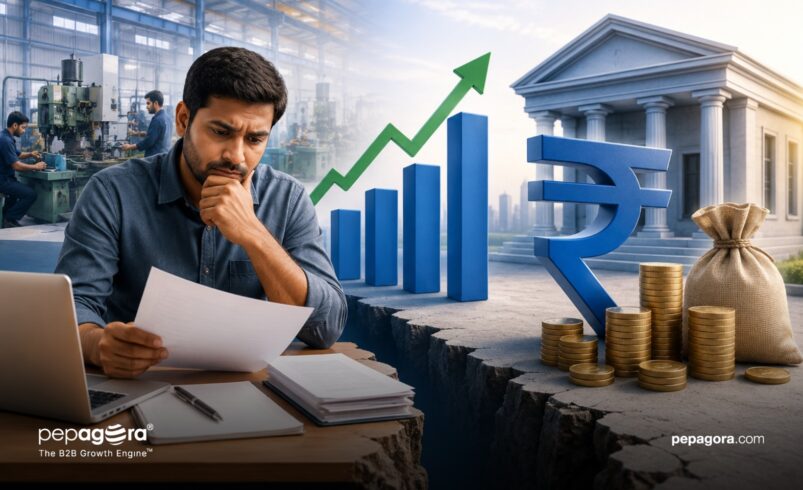
According to a recent report on the state of India’s financial services sector, only 14% of MSMEs currently have access to formal loans, leaving the vast majority dependent on informal sources of finance. The report estimates that the country’s formal MSME credit gap has widened to nearly ₹25 trillion, highlighting the urgent need for more inclusive financing solutions.
Why Access to Credit Matters
For any business, access to timely and affordable finance is essential for growth. MSMEs require funding to purchase machinery, manage working capital, hire employees, expand production, invest in technology, and explore new markets.
When businesses cannot obtain loans from banks or regulated financial institutions, many are forced to rely on informal lenders, family borrowing, or high-interest financing options. These alternatives often increase financial pressure and limit long-term business growth.
Without adequate funding, even profitable businesses may struggle to meet customer demand, upgrade their operations, or compete with larger enterprises.
The Growing Credit Gap
The report reveals that although India has made remarkable progress in digital payments, banking services, and financial inclusion, access to institutional credit has not improved at the same pace for MSMEs. A significant financing gap continues to exist between the amount of credit businesses require and the amount available through formal lending channels.
Micro enterprises are particularly affected because many operate with limited financial records, inconsistent cash flows, or insufficient collateral. Traditional lending models often rely heavily on credit history, audited financial statements, and asset-backed security, making it difficult for smaller businesses to qualify for loans.
As a result, many viable enterprises remain outside the formal financial system despite having strong business potential.
Why Many MSMEs Struggle to Get Loans
Several factors contribute to the low level of formal credit access among MSMEs.
Many businesses lack detailed financial documentation or maintain informal accounting practices, making loan assessment difficult. Some entrepreneurs are unaware of available government credit schemes or the eligibility criteria for institutional loans. Others face lengthy approval processes, strict documentation requirements, or collateral demands that discourage them from applying.
New businesses and first-generation entrepreneurs often encounter additional challenges because they have limited credit histories or established banking relationships.
These barriers prevent many deserving enterprises from accessing affordable finance, slowing business expansion and innovation.
Digital Finance Alone Is Not Enough
India has emerged as one of the world’s leaders in digital payments and financial technology. Millions of businesses now use digital payment systems, online banking, and digital accounting tools.
However, the report points out that digital financial inclusion does not automatically translate into easier access to business credit. While technology has simplified transactions, lending decisions still depend on risk assessment, documentation, and credit evaluation.
Experts believe that digital transaction data, GST records, cash-flow analysis, and alternative credit assessment methods can help lenders better evaluate MSMEs that may not have traditional financial records. Such innovations could improve credit access without compromising lending standards.
What Can Help Bridge the Credit Gap?
Financial experts suggest that addressing the MSME credit gap will require coordinated efforts from banks, non-banking financial institutions, policymakers, and fintech companies.
Simplifying loan application processes, promoting cash flow-based lending, expanding collateral-free financing, and increasing awareness of government-backed credit guarantee schemes can encourage more businesses to enter the formal financial system.
Improved financial literacy is equally important. Training entrepreneurs in bookkeeping, digital accounting, taxation, and financial planning can help them become more credit-ready and improve their chances of securing institutional finance.
Technology-driven lending models that use real-time business data instead of relying solely on traditional collateral may also expand access for first-time borrowers and small enterprises.
Why Closing the Credit Gap Is Important for India’s Economy
MSMEs account for a large share of India’s employment and industrial output. When these businesses receive adequate financial support, they are more likely to expand operations, create jobs, invest in new technologies, and contribute to exports.
Improved access to formal credit can also reduce dependence on informal lending, lower borrowing costs, improve business stability, and strengthen the country’s overall financial ecosystem.
As India aims to become a global manufacturing and innovation hub, ensuring that MSMEs have access to affordable finance will be essential for achieving long-term economic growth.
Looking Ahead
The finding that only 14% of MSMEs currently access formal loans highlights one of the biggest challenges facing India’s small business sector. While digital financial infrastructure has advanced rapidly, the next step is ensuring that businesses can also obtain the credit they need to grow.
Bridging the ₹25 trillion credit gap will require policy reforms, smarter lending practices, greater financial awareness, and wider adoption of technology-driven credit assessment models. By making formal finance more accessible, India can empower millions of entrepreneurs, strengthen the MSME sector, generate employment, and build a more resilient and inclusive economy for the future.
FAQs
Many MSMEs turn to informal lenders because they can access funds quickly with fewer documentation requirements. However, these loans often carry higher interest rates and can create long-term financial challenges compared to formal institutional credit.
MSMEs can improve loan eligibility by maintaining accurate financial records, filing GST returns on time, building a positive banking history, and preparing a clear business plan. These practices help lenders assess creditworthiness more effectively.
Fintech companies use digital tools and alternative data, such as transaction history and cash flow, to assess borrowers more efficiently. This helps many small businesses access financing that may not be available through traditional lending methods.